What is This Fungus and Why is it Dubbed 'One of Nature's Most Terrifying Sights'?
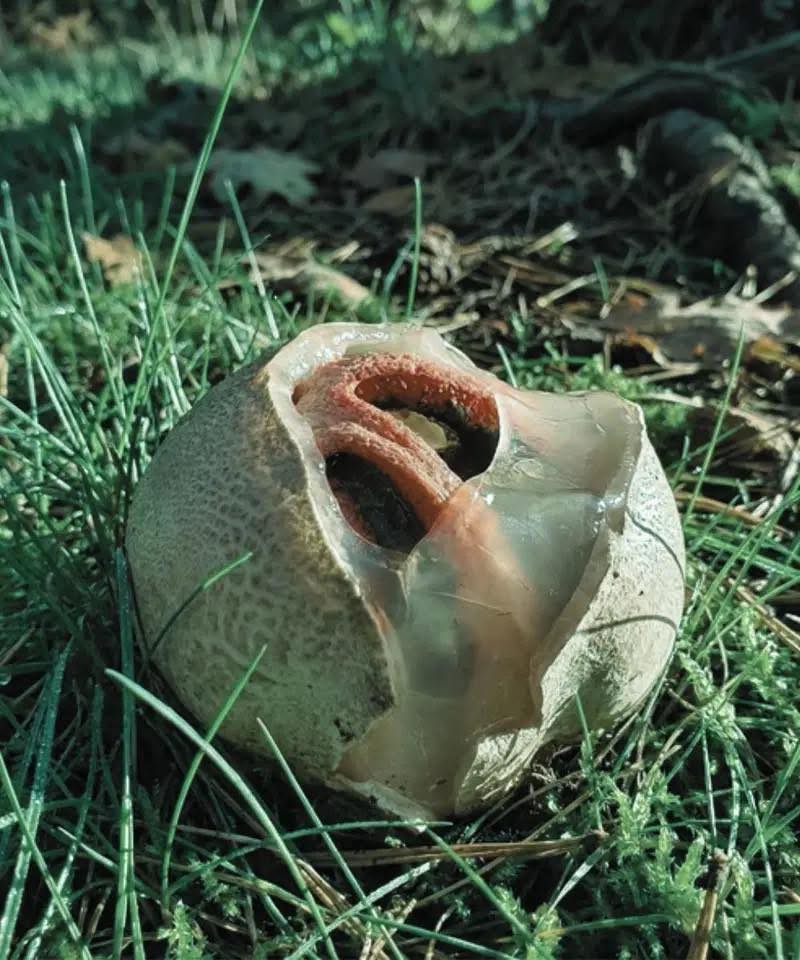
Imagem: Reprodução
Publicado em 11 de maio de 2026
With its unusual appearance and intense odor, this fungus has become one of nature's most curious and unsettling organisms.
If you've ever walked through a forest right after the rain and stumbled upon something on the ground that resembled an alien egg cracking open, you've likely encountered the curious mushroom stinkhorn.
Scientifically known as Phallus impudicus, this fungus is renowned for its unusual appearance and intense smell, characteristics that have made it one of the most intriguing — and unsettling — organisms in the natural world. But what exactly is it, and why does it cause such bewilderment?
The Initial Stage: The Enigmatic “Witch's Egg”
The stinkhorn begins its life in a stage that surprises even experts: the so-called witch's egg.
This small, firm-textured globe is partially buried in the soil and resembles a biological capsule encased in a gelatinous layer.
When this structure is cut open, the mushroom embryo can be seen folded inside, ready to expand.
Read also

Within an interval that can last just a few hours, the egg ruptures abruptly.
From this rupture emerges a porous, elongated stalk, which grows rapidly.
Some specimens can grow several centimeters in a single morning, ranking among the fastest-growing fungi.
The Distinctive Odor
Its appearance is already striking, but the smell is what truly defines an encounter with a stinkhorn.
Once it reaches its adult stage, the mushroom releases a strong odor reminiscent of rotting flesh.
While unpleasant for humans, this aroma serves an essential ecological function.
Unlike other species that rely on wind for spore dispersal, the stinkhorn uses insects to fulfill this role.
The top of the mushroom is covered by a viscous substance called gleba, responsible for both the odor and the transportation of spores.
Flies and other scavenging insects are attracted by the smell, land on the mushroom, and end up carrying the spores to new areas, ensuring the species' reproduction.
Strange Appearance, Yet Important in Nature
Despite causing alarm, the stinkhorn plays an essential role in forest ecosystems.
It is a saprophytic fungus, responsible for decomposing organic matter such as leaves, branches, and decaying wood.
This process contributes to the renewal of soil nutrients and aids in maintaining environmental health.
Nevertheless, its elongated shape, viscous texture, and the sudden way it emerges from the soil lead many people to associate it with creatures from horror films.
These elements have earned the mushroom nicknames such as “devil's egg,” “cadaver fungus,” and “zombie mushroom,” which become popular whenever photos go viral on social media.
Should You Be Afraid of This Fungus?
Despite its intimidating names, the stinkhorn poses no risk to humans. It can be touched without issue and is not poisonous.
Some cultures even consume the egg stage, although this is not recommended, as other toxic species can be mistaken for it.
A Fascinating Organism Beyond the Initial Shock
Its reputation as "nature's most terrifying fungus" stems from a combination of elements that naturally cause us unease: rapid growth, unusual shapes, a viscous texture, and a very strong smell.
However, behind this singular appearance lies a complex organism, extraordinarily adapted to its environment.
The stinkhorn is, above all, an example of how nature can surprise us — even when it pushes us out of our comfort zone.
Read also
Comments (0)
No comments yet. Be the first to comment!