The Surprising Reasons Why Tree Trunks Are Painted White (And Why It's So Important)
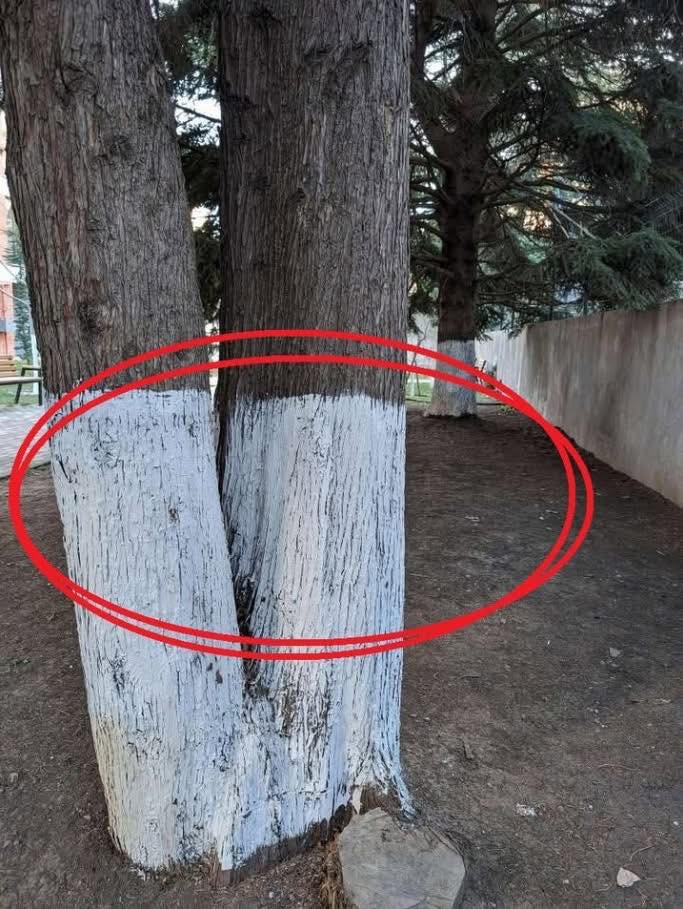
Imagem: Reprodução
Publicado em 01 de junho de 2026
If you've ever noticed tree trunks painted white, know that this practice goes far beyond mere aesthetics.
Have you ever noticed that in orchards or on farms, many trees have their trunks painted white?
It might seem like a mere aesthetic detail or a curious trend, but in reality, this practice serves a very practical purpose.
It's an ancient gardening technique that is simple, natural, and full of benefits for plant health.
Protection Against Temperature Fluctuations
Abrupt climate changes directly affect tree bark.
Read also

During winter, for instance, the sun warms one side of the trunk during the day, and the intense cold at night causes a thermal shock. This can lead to the bark cracking or peeling off—a phenomenon known as “winter burn.”
The white layer acts as a kind of sunscreen: it reflects light, reduces temperature fluctuations, and protects the bark from harsh weather conditions.
This technique is especially important for young trees, which still have more delicate trunks.
Natural Shield Against Insects
Insects such as ants, beetles, and borers often climb tree trunks to feed on the tender parts of the tree.
The white paint creates a barrier that disorients them and makes climbing difficult.
Some paint recipes contain natural ingredients, such as neem oil or diatomaceous earth, which have repellent properties.
Thus, the tree is protected without the need for harmful pesticides or chemicals.
Fewer Fungi and Diseases
Moisture is one of the main culprits behind fungi and rot in tree trunks.
When water accumulates in small cracks in the bark, it creates a perfect environment for mold and other microorganisms to emerge.
The white paint helps prevent this problem: it seals micro-fissures, prevents water penetration, and, being porous, allows the trunk to breathe.
This way, it helps keep the bark dry and healthy, especially in very humid regions.
Protection Against Rodents
During colder months, when food is scarce, rabbits, rodents, and even deer often gnaw on tree trunks.
This behavior can cause serious damage and even kill the plant.
The white color and the paint's texture, sometimes enhanced with essential oils like peppermint or garlic, are often enough to deter these unwanted visitors.
It's a simple, effective, and entirely natural method.
What Paint to Use and When to Apply It
Not just any white paint will do! The ideal is to use products specifically designed for agricultural use, such as those based on lime, clay, or horticultural latex.
These formulations are eco-friendly, allow the trunk to breathe, and still offer good protection.
The application should be done with a brush, covering the trunk up to about 50 centimeters in height.
The best time to paint is in late autumn or early winter, before the first frosts.
Read also
Comments (0)
No comments yet. Be the first to comment!