The Stinkhorn: Why This Unusual Fungus is Considered One of Nature's Most Disquieting Wonders?
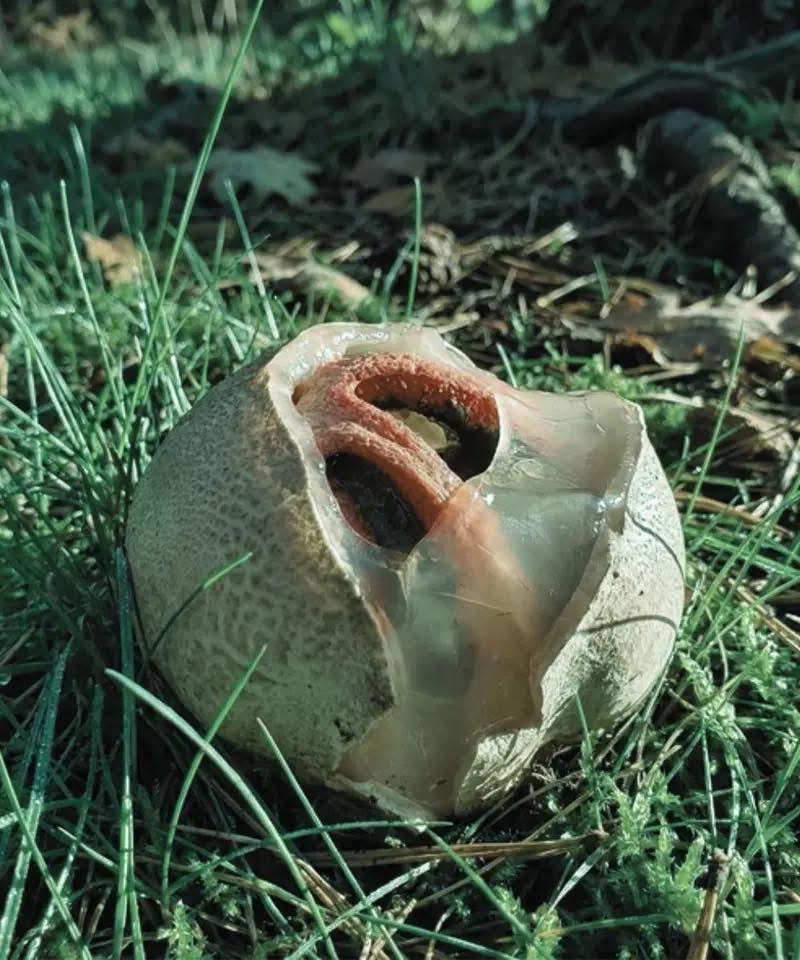
Imagem: Reprodução
Publicado em 13 de março de 2026
Fascinating Genesis: The Mysterious "Witch's Egg"
The Stinkhorn's life cycle begins at a stage that astonishes even mycologists: the phase known as the “witch's egg.”
This firm, globular structure rests semi-buried in the soil, resembling a biological capsule encased in a gelatinous covering.
Cutting open such a formation reveals the fungus's compacted embryo within, awaiting its moment of expansion.
Within a mere few hours, this formation suddenly erupts.
From this hatching emerges an elongated, porous stalk, characterized by rapid growth.
Read also

Certain specimens are capable of expanding several centimeters in a single dawn, ranking among the fastest-proliferating fungal species.
Anyone who has had the opportunity to explore a damp forest and stumbled upon a structure in the soil that evokes the image of an alien egg hatching has likely encountered the intriguing fungus known as the Stinkhorn.
Identified by science as Phallus impudicus, this fungal specimen is distinguished by its singular morphology and distinctive odor, attributes that place it among the most fascinating — and at times unsettling — forms of wild life. But what exactly is the nature of this being, and what accounts for such strangeness?
The Unmistakable Aroma and Its Strategy
While its morphology is striking, it is the effluvium it emits that truly defines an encounter with a Stinkhorn.
Upon reaching maturity, this fungus releases an intense fragrance, evocative of decomposing organic matter.
Though repulsive to the human sense of smell, this odor serves an ecological function of paramount importance.
Unlike other varieties that rely on wind for spore dispersal, the Stinkhorn employs insects to carry out this task.
The upper extremity of the fungus is coated with a sticky substance called gleba, which is the source of both the characteristic aroma and the mechanism for spore transport.
Flies and other saprophagous insects are attracted by this effluvium, land on the fungus, and consequently, disseminate the spores to new environments, thereby ensuring the reproductive continuity of the species.
The Duality of the Stinkhorn: Unusual Appearance and Ecological Relevance
Although it provokes unease, the Stinkhorn plays a fundamental role in forest ecosystems.
This is a saprophytic fungus, responsible for the decomposition of organic matter, including decaying foliage, branches, and trunks.
This process is vital for the soil's nutrient cycle and for the preservation of environmental health.
Nevertheless, its elongated configuration, sticky consistency, and sudden emergence from the substrate frequently lead to its association with creatures from horror narratives.
These characteristics have earned it popular nicknames such as “devil's egg,” “corpse fungus,” and “zombie mushroom,” terms that gain notoriety with the viral spread of its images on digital platforms.
Does the Stinkhorn Pose Any Danger?
Despite the macabre terminology, the Stinkhorn poses no threat to human health. Contact with it is harmless, and its nature is non-toxic.
Certain peoples incorporate the Stinkhorn in its ovoid phase into their cuisine, although such a practice is not advised, given the possibility of confusing it with poisonous fungal species.
Beyond Initial Strangeness: A Fascinating Organism
The reputation as “nature's most fearsome fungus” stems from the confluence of characteristics that instinctively provoke unease: its rapid development, atypical morphologies, sticky consistency, and an intensely pungent odor.
However, beyond this peculiar facade lies an organism of remarkable complexity, endowed with exceptional adaptation to its ecosystem.
The Stinkhorn represents, above all, proof of nature's capacity to surprise us — challenging, at times, our perception of comfort.
Read also
Comments (0)
No comments yet. Be the first to comment!