Researchers Uncover Hidden Risks of Nail Polish Application
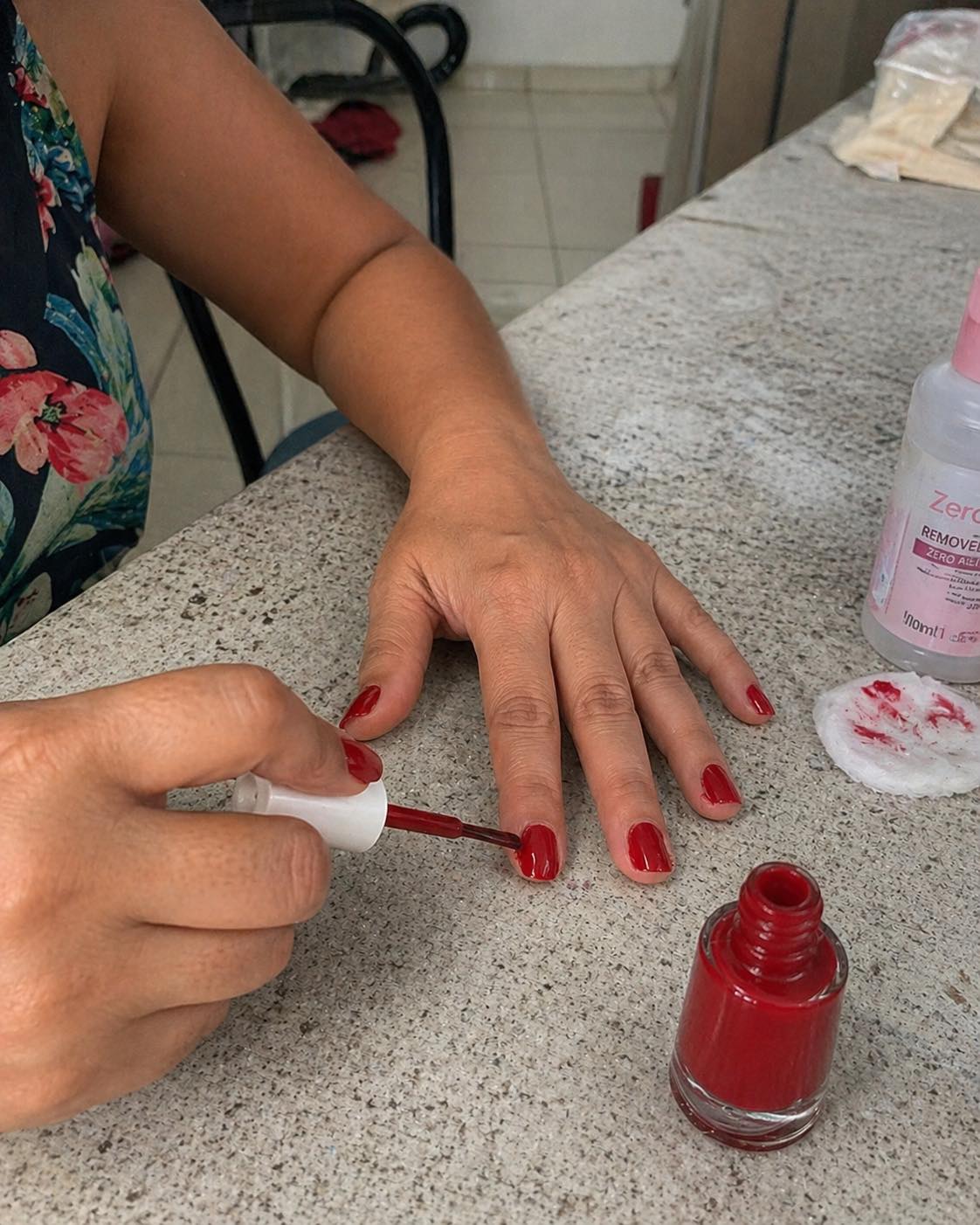
Imagem: Reprodução
Publicado em 30 de abril de 2026
The Hidden Risk in the Nail Polish You Use Every Day.
Nails are not just for beautifying hands; they are crucial protective structures, helping to preserve finger integrity and acting as a barrier against dirt, impacts, and microorganisms.
When healthy, they contribute directly to the proper functioning of the body.
Conversely, when weakened or damaged, they can become a gateway for larger problems.
And this is precisely where an extremely common habit comes in: the frequent use of nail polish — often done without any questioning.
Frequent Nail Polish Use and Its Silent Effects
You might be applying nail polish regularly without realizing its cumulative impact over time.
Read also

While it may seem like a harmless product, continuous use — especially without breaks — can silently expose the body to chemical substances.
Contrary to what many imagine, this exposure doesn't just happen through direct contact but also through inhaling the vapors released during application.
The strong characteristic smell of nail polish is not just unpleasant; it indicates the presence of volatile compounds being released into the environment.
Furthermore, keeping polish on your nails for days or even weeks transforms a one-time exposure into a continuous one — and this makes all the difference when it comes to health.
Chemical Substances and Health Risks
Some nail polishes may contain compounds such as formaldehyde, toluene, and phthalates.
Although little known to the public, these ingredients have been associated with effects such as irritation, allergies, headaches, dizziness, and even possible hormonal interference in cases of frequent exposure.
Another important point is that nails are not entirely impermeable.
When they are fragile, peeling, or dry, they can allow greater absorption of these substances, further increasing their impact on the body.
Continuous use can also lead to the wear of superficial layers, causing dryness, loss of strength, easy breakage, and increased vulnerability to fungi and bacteria.
ANVISA's Warning and Industry Changes
Concerns about these risks have led to significant changes.
The National Health Surveillance Agency (ANVISA) recently banned the use of substances like TPO and DMPT in nail polishes and nail products.
This decision follows standards adopted by the European Union and is based on studies that indicated possible health impacts in animal tests, such as fertility alterations and a potential risk of cancer.
The Brazilian Society of Dermatology emphasizes that, despite the lack of direct confirmation of these effects in humans, caution is necessary — especially in cases of prolonged exposure, as occurs with beauty professionals.
Gel Nails: Care and Potential Complications
Gel nails also require attention. Although seen as a more durable alternative, they involve the use of resins that need to be hardened with ultraviolet (UV) light.
These materials can trigger allergic reactions, ranging from mild to intense, and are also associated with problems such as fragility, deformities, and infections, especially when application or removal is not done correctly.
Even when performed by professionals, these techniques require rigorous care to minimize risks.
Signs Your Nails Need Attention
Often, the body gives signs that something isn't right — and nails can be one of the first indicators.
Changes such as redness, peeling, spots, sensitivity, weakening, or texture changes should be observed carefully.
Fungal and bacterial infections can also arise when there is damage to the structure or surrounding tissues, especially when cuticles are frequently removed.
Habits That Help Preserve Nail Health
Maintaining healthy nails depends not only on aesthetics but on a consistent care routine. Some practices make all the difference:
- Taking breaks between nail polish applications;
- Choosing quality, regulated products;
- Avoiding exposure in enclosed spaces during application;
- Regularly moisturizing nails and cuticles;
- Preserving cuticles, avoiding their excessive removal.
Furthermore, diet plays a fundamental role. Nutrients such as vitamins C and E, biotin, and zinc contribute to strengthening nail structure.
Balance: The Secret to Beautiful and Healthy Nails
Ultimately, the problem isn't with nail polish use itself, but with how it's used.
Excessive use, lack of breaks, and insufficient information are the main risk factors.
Rather than abandoning this habit, the ideal is to adopt it consciously.
Small changes in routine can significantly reduce exposure to potentially harmful substances.
Often, the greatest risks aren't in what seems dangerous, but in what we do every day without questioning.
And when you start noticing these details, you begin to make better choices — which, in the long run, can make all the difference to your health.
Read also
Comments (0)
No comments yet. Be the first to comment!