My Child Woke Up with a Spot on Their Ear: What Could It Be and How to Care for It Until the Appointment?
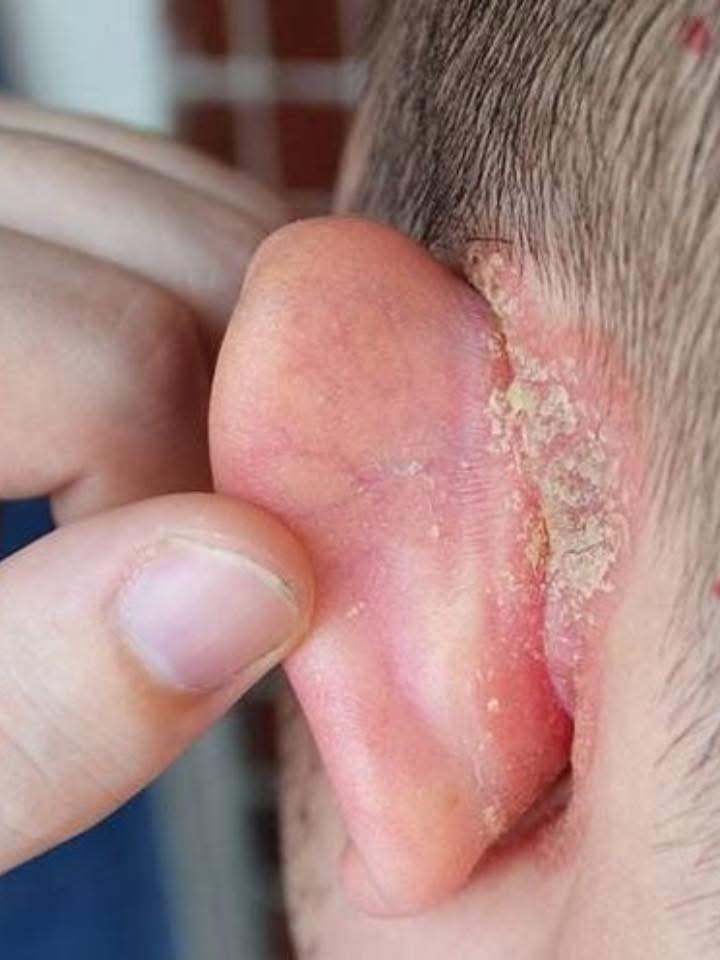
Imagem: Reprodução
Publicado em 30 de abril de 2026
Discovered a strange spot on your child's ear? See what it could be and how to relieve symptoms at home.
Waking up and noticing a different spot on your child's skin, especially on the ear, can put any parent on high alert.
And when the doctor can only see them a week from now, the concern only grows. After all, no one wants to wait while watching their child's skin worsen day after day.
This kind of situation, as stressful as it may seem, is more common than you might think. In many cases, what appears to be a serious problem could actually be infant eczema, a form of inflammation that frequently affects young children's skin.
One of the most common causes of these lesions is atopic dermatitis, which often appears in more sensitive areas, such as behind the ears, in arm creases, and behind the knees. When it emerges, the skin can become red, rough, very itchy, and even develop small scabs.
The good news is that even without an immediate diagnosis, you can take some simple measures at home to relieve discomfort and protect the skin until the appointment.
Read also

Why is the ear a common target for infant eczema?
It's not uncommon for infant eczema to manifest in the ear region. This happens because the skin there is very thin and exposed to various daily irritants: tight hats, headphones, shampoo runoff, or even synthetic fabrics in constant contact.
Furthermore, atopic dermatitis can be influenced by other factors, such as sudden temperature changes, dust in the environment, or even very hot baths.
Children with a family history of allergies, rhinitis, or asthma, for example, tend to have a greater predisposition to develop the problem.
It's important to observe some signs:
- Red skin with a rough texture;
- Persistent itching;
- Small bumps or flaking;
- Scabs or signs that the child is scratching excessively.
These symptoms don't always indicate severity, but they serve as a warning for parents to be vigilant and begin initial care.
What can be done at home to relieve symptoms?
The first step is to stay calm. Many cases of infant eczema improve with basic care, and how you handle the situation makes all the difference.
Here are some actions that work well during this waiting period:
- Wash the area with a mild, preferably infant, soap and rinse with lukewarm water.
- Pat the skin dry with a clean towel — no rubbing.
- Apply a hypoallergenic moisturizer specifically for sensitive skin.
- If itching is intense, a cold compress can help soothe the skin.
- Avoid using accessories or clothing that touch the affected area excessively.
Another alternative, if you already have it at home, is to use 1% hydrocortisone creams, which are often sold over-the-counter. But be aware: use sparingly and, preferably, with medical guidance, even if informal.
In what situations is it better to seek help before the appointment?
Most cases of atopic dermatitis progress slowly and allow for home management for a few days. However, there are times when it's not worth waiting.
Seek faster medical attention if:
- The area becomes very hot, swollen, or starts to discharge pus;
- The child develops a fever or becomes more irritable than usual;
- The skin appears more painful than just itchy;
- There is visible worsening within a few hours.
These are signs that a secondary infection may have developed, and in that case, it's time to see a doctor immediately.
How to prepare for the appointment day?
While waiting, jotting down everything you can will help you (a lot). The doctor will likely ask detailed questions, and you'll be clearer in your answers if you have the information at hand.
What's worth noting:
- When and how the spot appeared;
- What has been applied or done since then;
- If the child had contact with any new product or food;
- History of allergies or similar episodes.
A good tip is to take daily photos of the affected area. This way, the professional can see the evolution of the condition even if, by the appointment day, the skin has already improved.
Is it possible to prevent new flare-ups of atopic dermatitis?
After a bout of infant eczema, many people realize that a child's skin needs more constant care. And that's true. Prevention, in this case, is as important as treatment.
Here are some simple measures that help a lot:
- Moisturize your child's skin every day, even during periods when it's healthy.
- Use comfortable clothing, preferably cotton.
- Avoid very long or hot baths.
- Opt for neutral hygiene products, without fragrance or dyes.
- Keep your child's nails trimmed to prevent scratches from itching.
Over time, you'll notice which factors tend to trigger flare-ups in your child.
It could be excessive heat, a specific fabric, or even the use of perfumed soaps. The important thing is to observe, adjust the routine, and maintain continuous care.
Read also
Comments (0)
No comments yet. Be the first to comment!