If Lines Start Appearing on Your Nails After Age 40, It Could Be a Warning Sign…
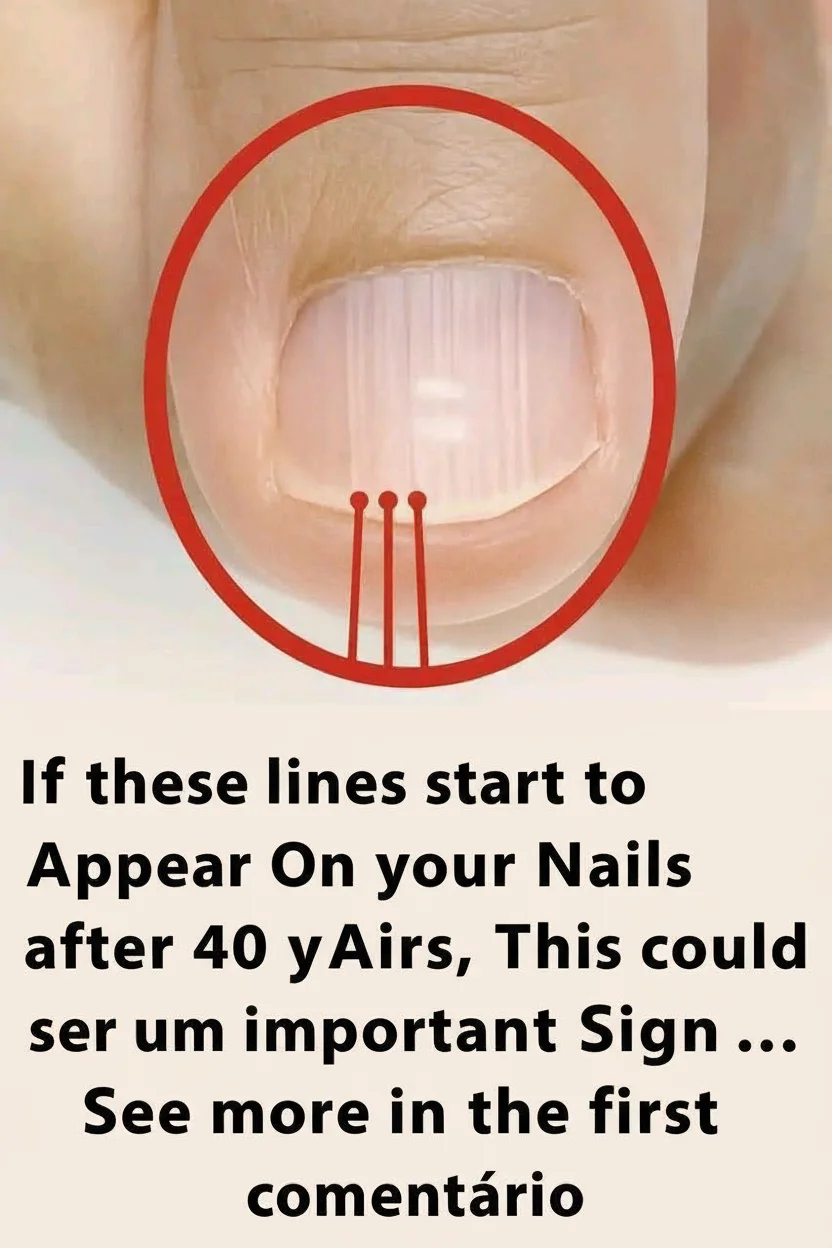
Imagem: Reprodução
Publicado em 16 de março de 2026
Published on November 17, 2025
Small Signs on Your Nails Can Tell You a Lot About Your Body.
Over time, many people start to notice small vertical lines that extend from the base to the tip of their nails.
While common, these marks can raise questions about their origin and when medical advice should be sought.
Understanding these changes helps differentiate natural aging from signs that require attention.
What Are Vertical Ridges on Nails?
Longitudinal ridges are slight elevations that run the entire length of the nail, from the cuticle to the tip. They can vary in depth and become more visible as we age.
Read also

This phenomenon is linked to the body's natural transformations over the years.
Just as skin loses elasticity and hair changes texture, nails also undergo structural alterations.
Keratin production — an essential protein for nail formation — can slow down or become irregular, leading to the appearance of these grooves.
Main Causes of Ridges After Age 40
Natural Aging
The most frequent cause is aging itself. Cell renewal slows down, including in the area responsible for nail growth.
With a slower pace, keratin distribution can become irregular, making the grooves more apparent.
Dryness and Brittleness
Over time, nails lose hydration and become more brittle. The drier they are, the more apparent the irregularities become.
Constant contact with water, soap, and cleaning products exacerbates this dryness.
Nutritional Deficiencies
A lack of nutrients such as biotin, iron, zinc, and magnesium can compromise nail strength.
As the body absorbs vitamins and minerals less efficiently after age 40, these deficiencies become more common and can intensify the ridges.
Associated Health Conditions
In some cases, vertical ridges can be related to problems such as thyroid disorders, poor circulation, or autoimmune diseases, including rheumatoid arthritis.
If nail changes are accompanied by symptoms such as hair loss, excessive fatigue, or very dry skin, it is advisable to seek professional evaluation.
When to See a Doctor
Although usually harmless, some changes require immediate attention:
- Darkening of the nail or presence of dark spots.
- Frequent breaks, thickening, or peeling.
- Pain, swelling, or redness around the nail.
These signs could indicate a fungal infection, trauma, or, in rare cases, subungual melanoma — a serious type of skin cancer that develops under the nail.
How to Care for Your Nails Over Time
Some simple actions help preserve the appearance and health of your nails:
- Keep your hands and nails hydrated, especially after washing them.
- Drink water regularly to prevent dryness.
- Include vitamins A, C, B-complex, as well as iron and zinc in your diet.
- Avoid abrasive tools and excessive filing.
- Consult a professional about the possibility of biotin supplementation.
With these care tips, you can keep your nails stronger, more hydrated, and with fewer irregularities over the years.
Conclusion
Vertical lines on nails are generally part of the natural aging process and, most of the time, do not pose a risk.
However, when they appear accompanied by pain, color changes, or peeling, they may indicate conditions that need to be evaluated by a specialist.
Observing these changes and maintaining a proper care routine helps preserve nail health and quickly identify any unusual signs.
Read also
Comments (0)
No comments yet. Be the first to comment!