“When the House Stopped Whispering”
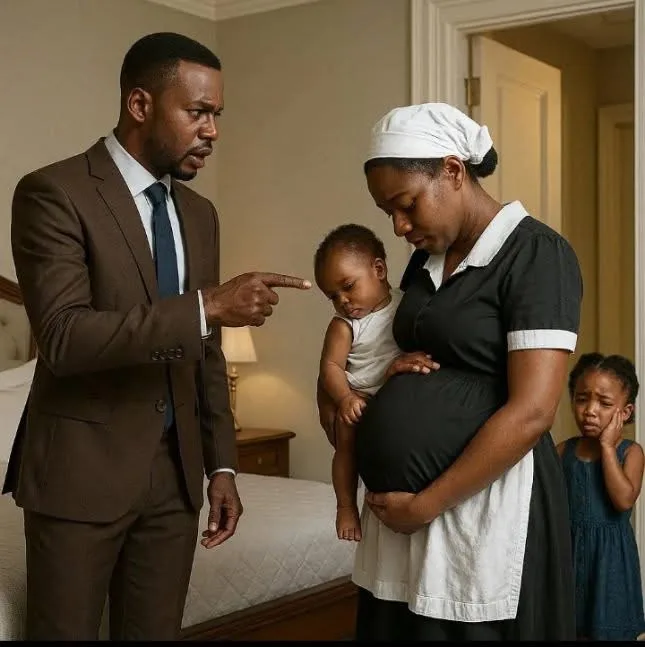
My father always treated my mother as if she were less than human — as if she were a movable part of the house, something he could order around, push, silence. Even pregnant, tired, and weak, he spoke to her as if he were addressing someone unworthy of existing. Insults, humiliations… for him, they were routine. For us, a kind of storm that never passed.
I grew up watching my mother shrink her shoulders every time he raised his voice. I grew up hearing her muffled sobs in the bathroom, trying to hide the pain so she wouldn’t awaken his fury. I grew up hungry, just like my little brother, because Dad rarely brought food home — and when he did, he said that “people like us” should be grateful even for leftovers.
That night, like so many others, he arrived irritated, slamming doors, kicking anything in his path. He looked at my mother with disgust.
“You don’t eat at my table. You eat on the floor with those kids of yours. And make sure you clean the whole house afterward. You hear me?”
She lowered her head and murmured “yes.” I saw her eyes shine, but she swallowed the tears. It was that or more pain.
The night had barely begun when he entered the bedroom like a hurricane, without knocking, without warning.
He grabbed my mother’s hair and forced her to sit.
“You irresponsible woman! This shirt cost more than you’re worth!”
He shoved her, and she fell against the wall with a muffled cry. I ran to her.
“Mom!” I shouted.
Even with tears in her eyes, she tried to smile at me — her silent way of saying “it’s going to be okay,” even when nothing was okay.
My father roamed the house like he carried a volcano inside him. Each day, colder, crueler.
My mother, pregnant and weak, could barely stand. But when he called, she went.
And so it happened that morning.
He called her downstairs. She descended slowly, breathless. When she approached, he poured an entire cup of hot coffee over her.
She screamed. The pain was impossible to hide. But he, indifferent, simply snarled:
“Shut up! Learn to do something right in this house!”
My mother fell to her knees, trembling, holding her arm. My brother cried in his crib. And I… I just stood there, paralyzed.
Without imagining that, that same week, everything would change.
The Day the Silence Ended
One Thursday afternoon, when my father left to drink with his coworkers, my mother called me close. Her eyes were different — not fearful, but resolute.
“Pack a small bag. Only the essentials. And get your brother.”
I obeyed. There was urgency in the air.
When the sun began to set, my mother grabbed our documents, wrapped my brother in a blanket, and took my hand.
“We’re leaving today. And we’re not coming back.”
We walked down the street almost running. We went to Mrs. Teresa’s house, a neighbor always kind despite her fear of getting involved.
She opened the door before we could knock.
“I heard the screams last night… come in. Quickly.”
She called the police, found us a shelter, a car, people willing to help my mother without judging her. That night, we slept safely. For the first time in years.
My father came home to an empty house. He tried looking for us, threatening us… but now the law was on our side.
And my mother was too.
A New Beginning
It took months to get a small room in another city. It took even longer for my mother to lift her head again. She found a job, went back to studying, and began smiling for real.
I grew up. My brother grew up. And that man’s shadow never entered our home again.
My mother says it wasn’t courage that saved her, but her children. I disagree.
It was courage.
Courage to break a cycle.
Courage to face the unknown.
Courage to believe she deserved more than pain.
And that day, when we walked out the door for the last time, our house — the one that once whispered suffering — finally became quiet.
A silence of freedom.