When Honesty Is Worth More Than Wealth
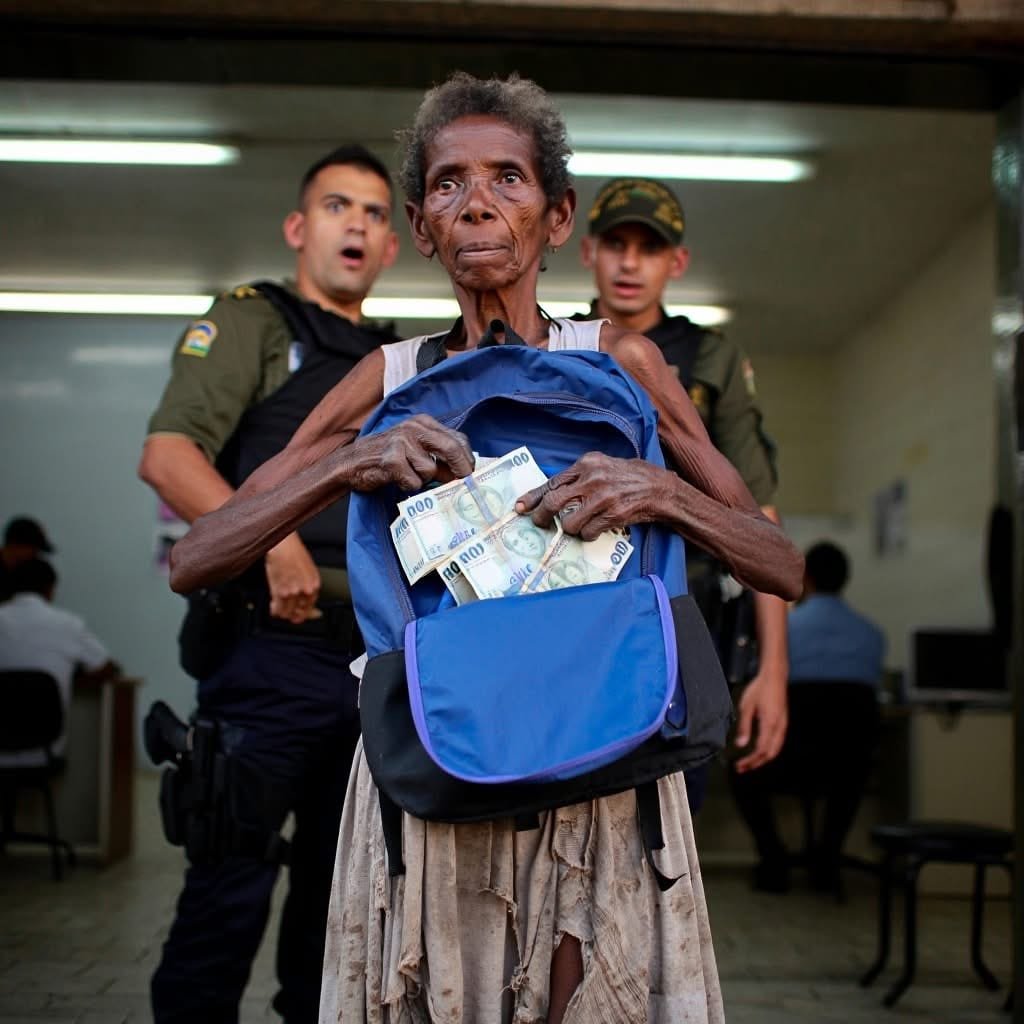
Dona Joana is 73 years old. She has been a recycler for 34 years in Salvador, Bahia.
She cannot read or write, never attended school, and signs her name with an “X.”
She survives on R$ 600 a month — money earned by collecting cans, cardboard, and plastic bottles.
To make R$ 600, she needs to gather around 600 kilograms of material every month.
Twenty kilos a day. Seven days a week.
It is hard, heavy, often humiliating work.
But it is all she has.
On Tuesday morning, March 14, 2024, at 6 a.m., Dona Joana was at her usual spot in the Pituba neighborhood, checking the trash bins of residential buildings.
She opened a large, heavy trash bag — typically a bad sign for recyclers, as heavy bags usually mean rotten food.
But she opened it anyway.
Inside, she found a navy-blue school backpack. Old, but zipped shut.
She opened it.
And saw money.
A lot of money.
Stacks of R$ 100 and R$ 50 bills, tied with rubber bands.
She couldn’t count well, but she could tell it was a fortune.
She looked around. The street was empty.
She placed the backpack inside her cart, covered it with cardboard, and went home.
By 8 a.m., she had called her neighbor, Dona Cida, who could read and count.
“Cida, help me count this.”
When she opened the backpack, Cida went pale.
It took her forty minutes to count everything.
“Joana… this is R$ 180,000.”
Dona Joana blinked, confused.
“How much is that?”
“It’s three hundred months of your income. Fifteen years of work.”
Silence filled the room.
Dona Joana looked at the money, then at her tiny wooden house — leaking roof, broken stove, old refrigerator.
With R$ 180,000, she could fix everything.
She could stop working for years.
She could travel to São Paulo to visit her daughter.
But she simply shook her head.
“Cida, this isn’t mine. Someone must be desperate for it.”
At 10 a.m., Dona Joana walked into the 14th Police Precinct of Salvador carrying the backpack.
The officer looked at her — a recycler, in worn clothes, smelling of garbage, holding an old backpack.
“Yes, ma’am? How can I help you?”
“I found this in the trash. There’s money inside. A lot of money. I need to find the owner.”
The officer opened the backpack and froze.
“You want to return this?”
“Yes. It’s not mine.”
The police counted it: R$ 180,400.
The officer explained:
“Without documents, without any identification… legally, after 90 days, this money would become yours.”
Dona Joana didn’t fully understand, but replied:
“Then I will come back every day until we find the owner.”
And she did.
Day 1: “Did the owner appear?”
Day 2: “What about today?”
Day 3, 4, 5, 6… every day at 10 a.m., she returned to the precinct.
The officers became emotional.
“This woman earns R$ 600 a month and is searching for the owner of R$ 180,000.”
On Day 7, the precinct posted the story on social media:
“R$ 180,000 found in a blue backpack in Pituba. Finder wants to return it. If you lost it, come forward with proof.”
The post went viral:
240,000 shares, 3.2 million views.
And on Day 9, something happened that would change Dona Joana’s life forever.
Early that morning, a man in his 40s arrived at the precinct, breathless, carrying documents, bank statements, and security footage from his building.
He had been robbed.
The thieves had taken the backpack thinking it held his work laptop.
When they realized it only contained money — part intended to pay for his mother’s surgery and part to settle debts — they discarded it in the trash.
The police called Dona Joana.
When the man saw the backpack, he broke down in tears.
“You saved my mother’s life. I have no words to thank you.”
Dona Joana simply smiled.
“Be at peace, my son. What is yours must return to you.”
The story spread across Brazil.
Newspapers, radio stations, and TV programs wanted to interview her.
People across the country were moved by her honesty.
Within days, donations poured in: food, furniture, appliances, building materials.
A group of volunteers created a crowdfunding campaign — it raised over R$ 220,000, more than the amount she returned.
With the help of the community, Dona Joana renovated her home, got a new refrigerator, a new stove, a real bed, a proper roof.
And for the first time in decades, she was able to rest a few days without worrying about the next load of trash.
When reporters asked why she returned the money, she answered:
“Because if it were mine, I’d want someone to return it. God gave me little… but He gave me a conscience.”
Today, Dona Joana continues living simply — but with more dignity, comfort, and recognition.
Her story remains a reminder that true honesty has nothing to do with wealth, and everything to do with choice.
And that is how a woman who had almost nothing became a symbol of everything that truly matters.