The Bricklayer Who Raised a Doctor
I was born into a broken family. When I could barely walk, my parents separated. My mother, Teresa, took me to Alentejo — a land of ruthless sun, ancient olive trees, and long silences.
My biological father vanished from my life as if wiping a mark from the sand.
I remember only the absence. Absence of presence, of care, of everything.
When I was four, my mother married again. The man who entered our lives was a bricklayer. He arrived with nothing: no house, no savings, only sunburnt shoulders and hands so cracked they looked like stone.
At first, I didn’t like him. He left early, arrived late, always smelled of cement. But he was the first to fix my bike, to mend my worn-out sandals.
When I was bullied at school, he didn’t scold me — he picked me up on his old bicycle, carrying me home as if he were transporting something precious.
“You don’t have to call me Dad. But if you ever need one, your Father António will be right behind you.”
And that was it. Father António.
Every day he asked:
“How was school today?”
He didn’t know advanced math, literature, or philosophy, but he always repeated:
“Study. Knowledge earns you respect.”
We lived with little. With very little.
When I got into university in Lisbon, my mother cried with joy and pride.
Father António remained silent… and the next day sold his only motorbike to pay my registration fee.
When he left me at the student residence, he brought a bag with homemade bread, cheese, and roasted almonds.
“Study, daughter. Study well.”
I completed my undergraduate degree, then my master’s, and finally my doctorate.
During all that time, he kept working, even when he already walked hunched over from 25 years of construction work.
“I’m raising a doctor. That gives me strength,” he would say, smiling with tired eyes.
The Day of the Defense
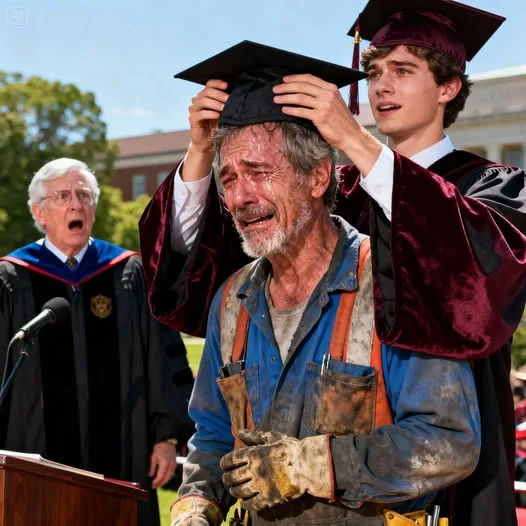
On the day of my PhD defense at the University of Lisbon, I begged him to go.
He wore a borrowed suit and tight shoes that hurt his feet, but he went anyway.
He sat at the back of the room, still, proud, as if afraid to ruin the moment just by breathing.
The defense ended. I passed with distinction.
Professor Almeida shook my hand, congratulated me — and then greeted my family.
When she reached my father, she suddenly stopped. She stared at him, surprised, almost emotional.
“You are Mr. António, aren’t you?”
“When I was a girl, there was a construction site in front of my house in Barreiro. I remember seeing you carry an injured colleague down the stairs… even though you were hurt too.”
Father António blushed, embarrassed, adjusting his uncomfortable shoes.
Before he could reply, the professor smiled tenderly and said:
“I never forgot that. My mother used to say you were the most honest and humane bricklayer she’d ever seen.”
He lowered his gaze, shy.
Standing beside him, I felt my heart overflow.
The Recognition That Mattered
In that moment, I understood something no diploma could ever teach:
Greatness doesn’t lie in titles, but in the way we lift others up.
The professor turned to me and said:
“Now I understand where all that strength comes from.”
My father remained silent. But the way he breathed deeply, straightened his back just a little, bit his lip to keep from crying… said everything.
I never needed a father by blood.
I needed a true father.
And that, I had.
Father António — the bricklayer who didn’t just build houses.
He built my life.