Parental Arguments Can Alter Children's Brains from Early Age, Experts Warn
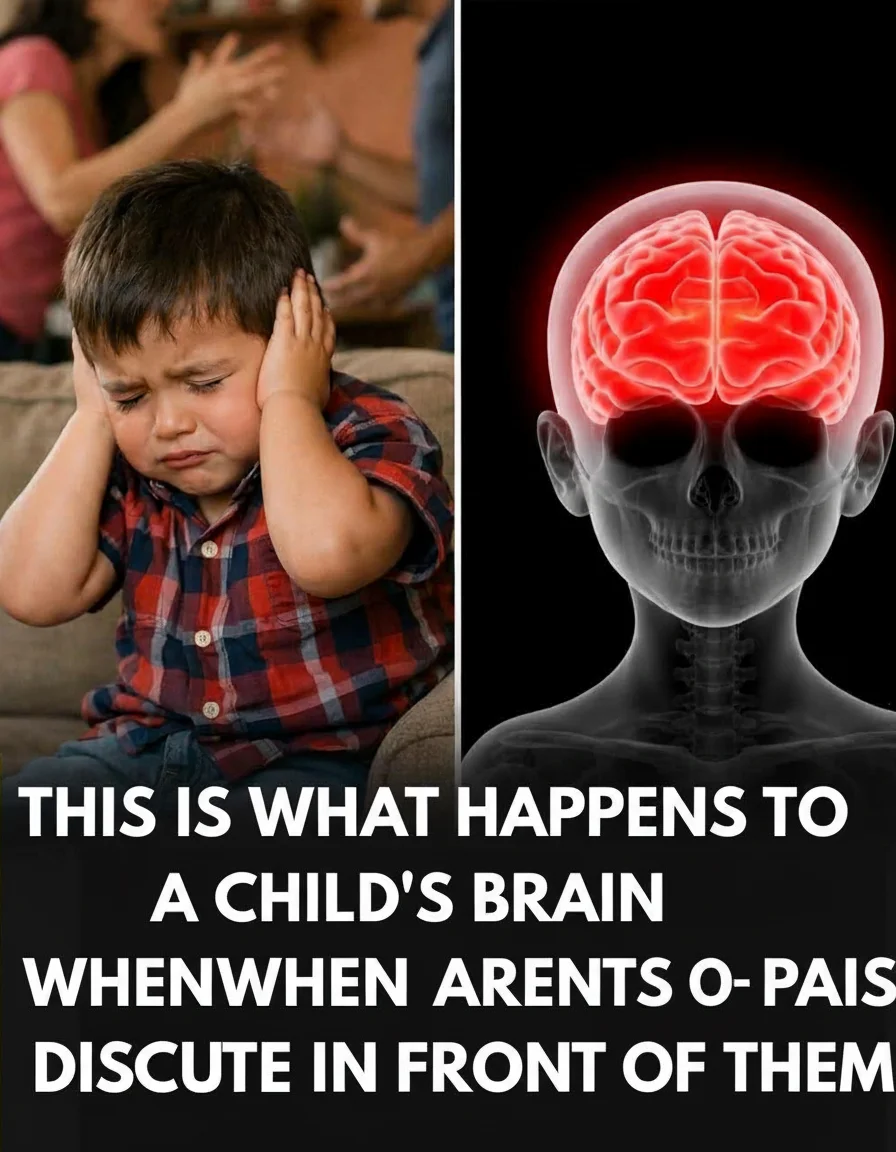
Imagem: Reprodução
Publicado em 17 de março de 2026
Published on February 16, 2026
Understand how conflicts at home impact children's emotional development.
Arguments between parents within the home can directly affect children's development, even in their earliest years.
Although many adults believe that young children don't understand what's happening, the child's brain reacts to the emotional climate even before comprehending words.
When parents frequently clash, children perceive changes in tone of voice, facial expressions, and the tension in the environment. This occurs because, from an early age, the brain is shaped by experiences lived within the home.
Furthermore, early childhood is marked by intense neural connection formation. In other words, every experience leaves its mark. Therefore, how parents handle disagreements can influence how children learn to regulate emotions in the future.
For this reason, understanding how family conflicts impact children's brains is essential for anyone wishing to build a safer and healthier environment.
Read also

How Do Children's Brains React to Parental Arguments?
Children's brains are extremely sensitive to the environment created by their parents. In the first years of life, the brain functions as an adaptation hub, constantly adjusting to received stimuli.
When there are shouts, tension, or hostility, the child's body interprets the situation as a threat. As a result, biological defense mechanisms are activated, releasing stress-related hormones.
Among the most common reactions, we can highlight:
- Increased cortisol production
- Constant state of alert
- Difficulty relaxing
This process does not depend on the child understanding the content of the discussion. The body reacts first. Afterwards, the mind tries to organize what is happening.
If parental arguments are frequent and intense, children may begin to live in a continuous state of vigilance. Over time, this influences how they deal with emotions and relationships.

Emotional Security: The Foundation of Child Development
For children, the predictability offered by parents is fundamental. An emotionally stable environment conveys a sense of protection, which fosters healthy brain development.
When this security is shaken by recurrent conflicts, the impact can manifest in behavior. Often, children do not verbalize their discomfort but show clear signs.
Among these, the following are observed:
- Greater irritability than usual
- Sleep disturbances
- Excessive attachment to one parent
- Changes in appetite
These reactions are forms of adaptation. Children's brains attempt to find ways to cope with perceived stress within the home.
On the other hand, this does not mean that parents can never disagree. Disagreements are part of any healthy relationship.
What Really Makes a Difference Isn't the Conflict Itself, But How It's Handled
Child development specialists often emphasize that the problem isn't the existence of conflicts, but rather how parents manage these situations in front of children.
When disagreements are resolved with dialogue, respect, and visible reconciliation, the message conveyed is different. In this scenario, children learn that conflicts can be resolved without aggression.
However, in environments where shouting, accusations, and prolonged silence prevail, learning tends to take a different path. The child's brain registers patterns and transforms them into references for future relationships.
It's worth remembering that children learn much more from what they observe than from what they hear. Thus, parental behavior serves as a constant model.
Early Childhood: A Decisive Period
In the early years, children's brains undergo an accelerated pace of development. Neural connections strengthen or weaken according to repeated daily experiences.
Therefore, intense parental conflicts during this period can have a more profound effect. The emotional system is still developing, making the child more vulnerable to prolonged stress.
This does not mean that damage is inevitable or irreversible. On the contrary, environments that begin to offer emotional security can foster new response patterns.
Small changes in routine already make a difference, such as:
- Avoid heated arguments in front of children
- Explain, in simple terms, when there has been a disagreement
- Clearly demonstrate reconciliation
- Seek professional help if conflicts are frequent
These attitudes help rebuild the sense of stability.
The Conscious Role of Parents in Children's Well-being
Parents don't need to be perfect. However, they must be aware of the impact of their attitudes on children's development.
The child's brain does not distinguish complex details of discussions. It captures the emotional climate. If the environment is predominantly safe, welcoming, and predictable, children tend to develop greater emotional balance.
Therefore, reflecting on how conflicts are handled within the home is an important step. By adjusting their tone, seeking dialogue, and demonstrating reconciliation, parents teach, in practice, how to deal with differences.
Ultimately, what shapes children's brains are not isolated incidents, but the pattern that repeats day after day. And it is precisely within this pattern that lies the opportunity to build healthier relationships from the beginning of life.
Read also
Comments (0)
No comments yet. Be the first to comment!