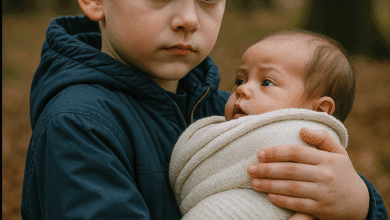
On New Year’s Eve, a boy was cast out by his own parents.
Years later, when they knocked on his door expecting forgiveness, what they found on the other side changed everything in ways they never saw coming.
Outside the windows of the houses, warm garland lights glowed, Christmas trees reflected in the glass, and New Year’s melodies floated in the air. But beyond those walls lay a white silence. Snow fell in thick flakes, as if an invisible hand endlessly sprinkled it from the sky. The stillness was so dense it felt almost sacred—like a temple. No footsteps, no voices. Only the wind howling through pipes and the soft whisper of snow covering the city like a blanket of forgotten fates.
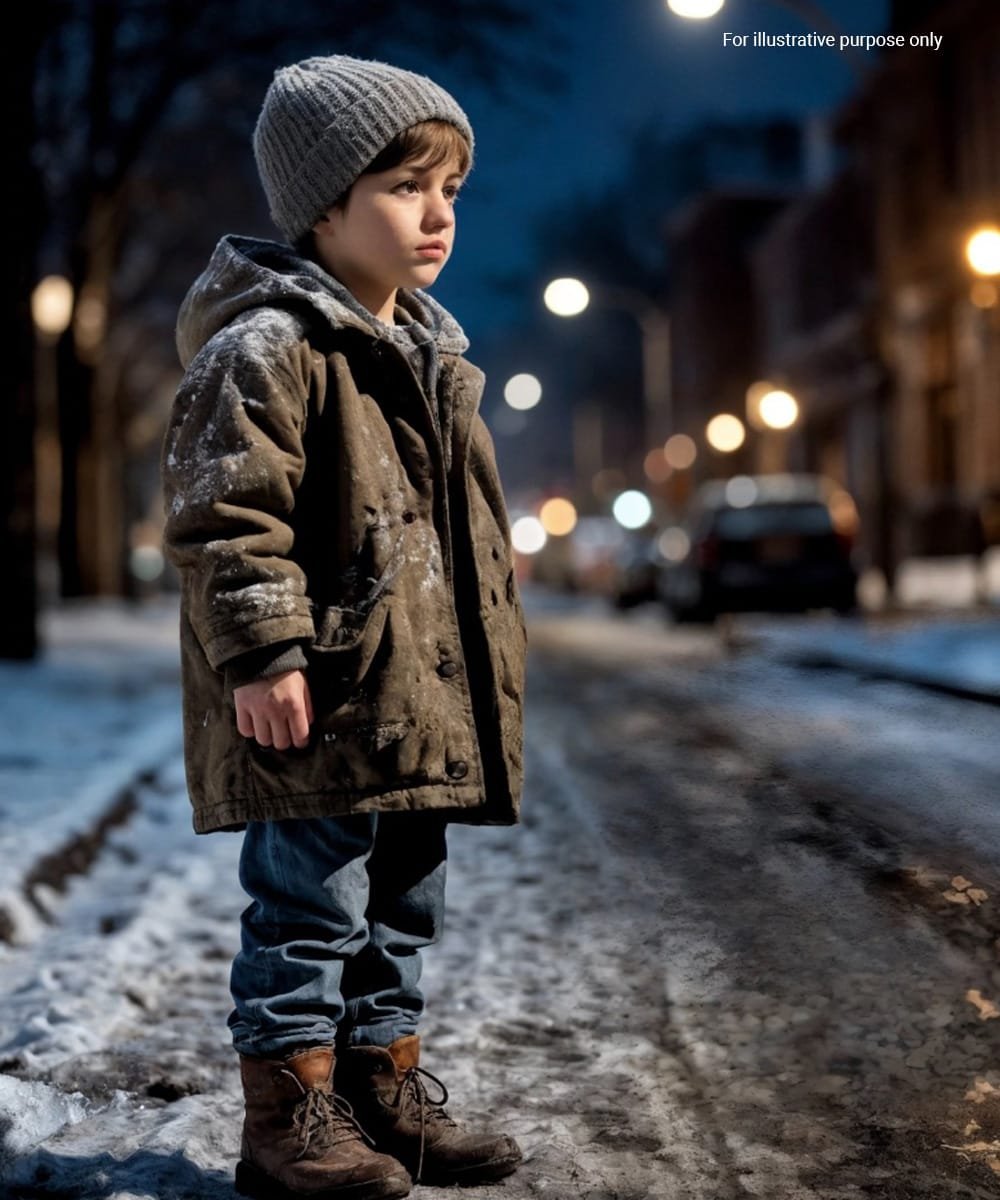
Kolya Sukhanov stood on the porch, barely believing this was real. It felt like a nightmare—senseless and cruel. But the cold seeped through his clothes, soaked his socks, and the icy wind bit his face. The backpack lying in the snow reminded him this was no dream.
“Get out of here! I never want to see you again!” his father’s hoarse, hate-filled voice snapped him out of his daze. The door slammed right in front of his nose.
His father had kicked him out. On Christmas night. Without his belongings. Without goodbye. Without a chance to return.
And his mother? She stood nearby, leaning against the wall, arms folded across her chest. She didn’t say a word. Didn’t try to stop her husband. Didn’t say, “This is our son.” She just shrugged helplessly and bit her lip to keep from crying.
She remained silent.
Kolya stepped down from the porch, snow seeping into his slippers, stabbing his skin with icy needles. He didn’t know where to go. Inside, he felt hollow—like his heart had fallen deep beneath his ribs.
That’s it, Kolya. Nobody needs you. Not even them. Especially them.
He didn’t cry. His eyes were dry. Only the sharp pain in his chest reminded him he was alive. It was too late for tears.
And so he walked. Through the blizzard. Under the dim glow of streetlamps lighting the empty streets. Behind windows, people laughed, sipped tea, and unwrapped gifts. But he was alone—in the middle of a celebration that had no place for him.
He wandered for hours—he didn’t remember how many. The streets blurred together. A security guard chased him away from one building; passersby avoided his gaze. He was a stranger. Unneeded. Unwanted.
Thus began his winter—the first winter of loneliness. The winter of survival.
For the first week, Kolya slept wherever he could—on benches, in underpasses, in bus shelters. Everyone chased him away—shopkeepers, security guards, strangers. In their eyes, there was no pity, only irritation. A boy in a worn jacket, with red eyes and a disheveled look—a living reminder of what they feared.
He ate whatever he could find: scraps from garbage bins, sometimes stealing bread when no one was looking. Not out of malice, but hunger. Out of fear of dying.
One evening, he found shelter in an abandoned basement on the outskirts of the city. It smelled of mold and dampness, but steam from a heating pipe made it warm enough to survive the night. The basement became his home. He laid down newspapers, gathered cardboard, and covered himself with rags.
Sometimes he sat there, silent, his body trembling—not from the cold, but from the pain inside.
One day, an old man with a cane found him. “Alive? Good. I thought it was just cats again.” He left Kolya a can of stew and a piece of bread without asking questions.
Later, he returned from time to time with more food. Once, he said:
“I was fourteen when my mother died and my father hanged himself. Hang in there, kid. People can be cruel. But you—you’re not like them.”
Those words stayed with Kolya.
One morning, he couldn’t get up. Fever burned his temples, and his body shook uncontrollably. Through the haze, he remembered crawling toward the stairs before strong hands lifted him.
“My God, he’s frozen!” a woman’s voice said—a voice strict but full of care.
That was how he met Anastasia Petrovna, a social worker. She held him close, as if she knew he hadn’t felt warmth in a long time. “It’s okay, son. I’m here now. Everything will be fine.”
She took him to a shelter—a small building with peeling walls but clean sheets and the smell of home-cooked food. He slept without fear for the first time in months.
Anastasia visited every day, bringing books—real ones, not childish fairy tales. She once handed him the Constitution. “Know your rights, Kolya. If you know them, you’re never truly helpless.”
He listened. He read. And slowly, a desire grew inside him—to become someone who could protect others.
By eighteen, he passed the exams and entered the law faculty at Tver State University. He studied by day, worked by night, and never said, “I can’t.”
By twenty-six, he worked at a large law firm, but he never stopped helping those who couldn’t pay—orphans, abused women, the elderly.
That Christmas, snow was falling again when two people walked into his office—a bent old man and a woman in a faded scarf. His parents.
“Kolya… forgive us,” his father said hoarsely. His mother touched his hand, eyes wet with tears.
Kolya was silent. There was no pain, no anger—only emptiness. “You’re late. I died for you that night. And you died for me.”
He opened the door for them to leave. “I wish you health. But there’s no way back.”
They left quietly.
Kolya returned to his desk and opened a case about a runaway orphan. And somewhere in his mind, Anastasia’s voice echoed:
“Rights are your shield. Even if you have nothing.”
Now, he was that shield—for those who stood barefoot in the snow.