The Ajar Door
Michael Turner had temporarily moved into his mother’s house in Getafe, claiming he needed to care for her after a hip surgery. He had been sleeping there for almost three weeks. Our conversations were brief, always with background noise, and he always seemed exhausted.
I decided to surprise him. I took the car with our seven-year-old daughter, Sophie, without telling Michael. I imagined he would be happy to see us. But the surprise I had planned revealed something I could never have imagined.
From the outside, the house seemed quiet. But the front door was ajar. It felt strange—Michael was obsessive about security. Sophie stepped ahead and peeked first. She froze and gently tugged on my sleeve:
—Mom… look. But quietly.
A chill ran through my stomach before I even entered.
Inside, there were voices I didn’t recognize. A stifled laugh. The clinking of glasses. It didn’t sound like a hospital or care environment. It sounded… like a social gathering.
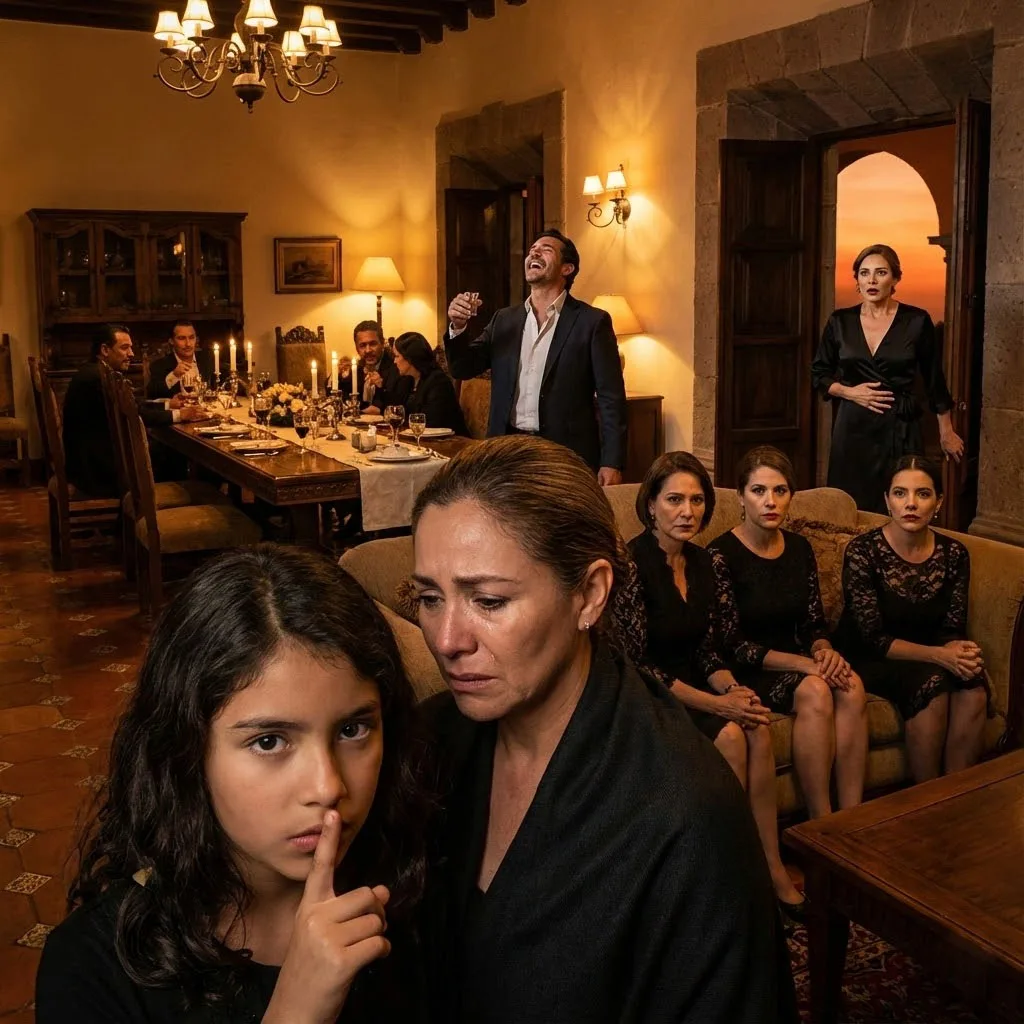
When I stepped inside, the living room was bright. Three women were sitting on the sofa: Linda Turner, my mother-in-law, and two strangers, elegantly dressed and relaxed. On the table were bottles of wine and freshly prepared food. And there was Michael, standing, laughing, a glass in hand. His mother looked more like a hostess than a patient.
Michael saw me. His smile froze.
—What are you doing here? —he asked, too quickly.
Sophie hid behind my leg.
—I thought you were taking care of your mother —I said, trying to keep my voice steady—. I thought she needed help.
Linda carefully put down her glass.
—Darling… —she began—, it’s not what it looks like.
But it was exactly what it looked like.
The women watched us with a mix of curiosity and pity. One murmured something like, “that must be her.” Michael stepped closer and whispered:
—We’ll talk later. Not in front of the child.
I looked around. The decoration hadn’t changed, but the atmosphere had. Everything felt rehearsed, staged. No excuse could fit what I was seeing.
I realized I had walked into a scene that had been happening for weeks without me knowing.
I didn’t scream. I didn’t make a scene. That seemed to unsettle them more than any outburst.
—Sophie, go to the kitchen and wait —I said firmly.
Michael tried to stop her, but I looked at him.
—Now.
When our daughter left, silence fell heavily.
—Do you want to explain this? —I asked.
He ran his hand over his face.
—It’s not what you think.
Linda intervened:
—Michael just needed space —she said—. You’ve been… intense lately.
The word hit me like a knife.
—Space for what? —I asked— To host dinners with strangers while saying you’re taking care of your mother?
One of the women stood uncomfortably:
—We were told you were separated.
Michael closed his eyes. Everything broke in that moment. He confessed that for months he had been saying our marriage was “on pause,” that Linda supported him, and that the house was a “safe place” to rebuild his life while I kept believing he was caring for someone ill.
—And Sophie? —I asked— Was she part of the plan too?
Linda sighed.
—Children adapt.
A cold clarity hit me. I picked up my daughter and left.
That night, I spoke with a lawyer. I discovered that Michael had manipulated accounts, schedules, and versions of the story. There had been no direct infidelity yet, but there was emotional abandonment, manipulation, and systematic deceit.
Separation became inevitable. Michael tried to justify himself:
—I didn’t want to hurt you.
—But you did —I replied—, and you used our daughter as a backdrop.
We moved. Sophie took time to understand why her father no longer came to sleep over. I explained simply, without lies:
—Daddy made choices that hurt us —I said—. Now we have to take care of ourselves.
Michael apologized many times. Too late. Trust never returned. Linda never apologized.
I learned something essential: when someone asks for silence, it’s usually because the truth will expose them.
Today, we live in a small but peaceful apartment. Sophie laughs freely again, and I sleep without suspicion.
The ajar door was a silent warning. And I learned to listen to it.