The Snow Triplets
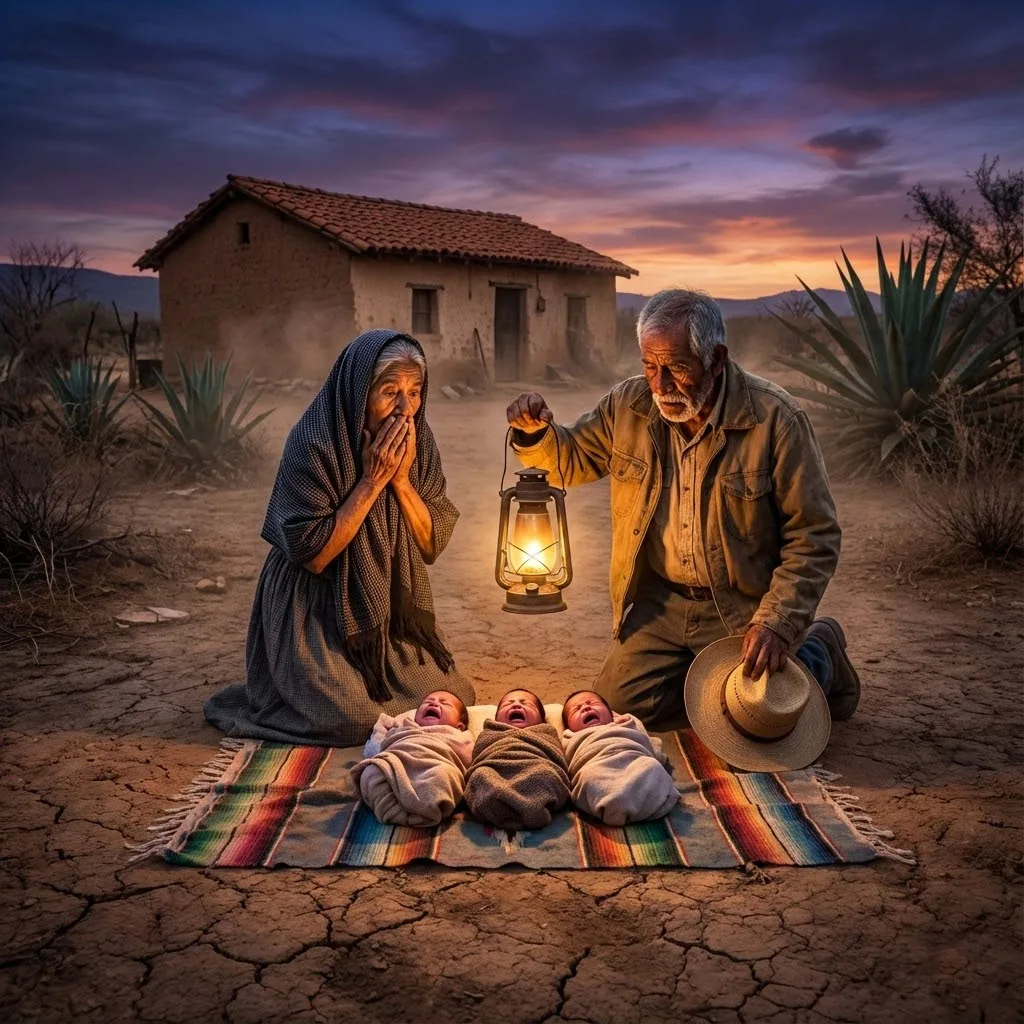
Mark stood by the window, watching the snow silently fall over the farm. In the darkness, he thought he saw movement: footprints moving away from the door. But when he went to check again, they were gone.
The next morning, the sheriff arrived, accompanied by a social worker. They investigated but found no clues: no missing persons, birth certificates, or mothers looking for their children. The babies were officially registered as “unidentified triplets,” probably abandoned a few hours after birth. The state offered to place them in foster homes, but Ellen refused:
— They are safe here — she said firmly. — We will take care of them.
Mark hesitated, aware of the effort it would require. The farm barely produced enough to keep the lights on. But seeing Ellen holding the three babies — two girls and a boy — something stirred inside him: a fragile hope.
They named the little ones Emma, Claire, and Noah.
The following years were hard. The Millers sold their truck, took on extra jobs, and learned to make every penny count. Ellen sewed clothes by hand and cooked with what the land provided. Mark repaired fences to earn a little extra. They lived exhausted, but full of joy and discovery.
The triplets grew quickly. Emma was bold and curious; Claire, sweet and attentive; Noah, calm, yet always observant and helpful. From a young age, they understood the simplicity of their parents’ life but never felt poor. The small house was filled with laughter, stories, and the aroma of freshly baked bread from Ellen.
Even so, life tested the family. One summer, a drought destroyed part of the crops, almost bringing Mark to bankruptcy. But when Ellen considered giving up, he reminded her:
— We’ve already received more than we ever dreamed of. It’s worth fighting for.
By the time the triplets turned sixteen, each had already shown the resilience of their parents. Emma earned a scholarship to study medicine; Claire discovered a passion for environmental engineering; Noah stayed close, helping rebuild the farm using sustainable methods he learned online.
Then, one night, a letter arrived. It was from the State Department of Child Services, marked confidential. Inside was a name: a possible match with the children’s biological mother. Ellen’s hands trembled as she held the paper.
Mark read in silence:
— She’s alive. And she wants to meet them.
Ellen looked toward the living room, where the three teenagers laughed watching an old movie, and felt a tightening in her chest:
— What if she wants to take them back? — she whispered.
A week later, the Millers met Jessica Hayes, a woman in her early thirties, at a café in downtown Whitecreek. She appeared fragile but kind. Tears streamed down her face as she saw them.
— I was seventeen — Jessica began. — I had no one. My father had left, and I was living on the streets. The night I left them, I thought I was saving their lives, not abandoning them. I came back the next morning, but they were gone.
Ellen extended her hand and held hers:
— You did what you could. They have had a good life. We took care of them, and even unintentionally, you gave us this opportunity.
The meeting was intense and emotional. The triplets listened silently, each reacting in their own way: Emma cried openly; Claire asked questions with quiet intensity; Noah remained still, looking at the mother who had raised him amidst scarcity and hardship.
When they returned home, the house felt different: peaceful, yet alive. Ellen noticed her children’s unease and said gently:
— Family is not made of blood. It’s who stays when the storm passes.
Years later, the Millers’ story became known beyond Whitecreek. Emma became a doctor at a free clinic; Claire, an engineer working on clean water projects; and Noah turned the farm into a community center that fed dozens of families in need.
When journalists asked about their success, Emma always said:
— It all started with two people who had nothing, but gave everything.
On the twenty-first winter since that snowy night, Ellen and Mark sat on the porch, watching the flakes fall. Laughter and music filled the air: neighbors, friends, and children celebrating the farm’s charitable anniversary.
Mark looked at Ellen, smiling:
— Remember that night?
— I do — she replied. — Three cries that saved us.
Outside, the snow fell soft and endless. But inside the farm, one truth remained:
Love, when shared, can turn even the coldest night into light.