My Daughter Called Me Crying
My daughter called me crying.
— Dad, please come and get me.
At that moment, I knew something was terribly wrong. Lucía’s voice was trembling so badly she could barely speak. She didn’t explain anything. She didn’t need to. As a father, I felt it in my entire body: she was in danger.
My name is Javier Morales, and I will never forget that night.
I grabbed my keys, left the house without even putting on a jacket, and drove to her in-laws’ house on the outskirts of the city. My heart was pounding so hard it felt like it would burst out of my chest.
When I arrived, the front door was slightly open. Before I could step inside, Carmen, Lucía’s mother-in-law, stood in my way, blocking the entrance. Her arms were crossed, her gaze cold and calculating.
— She’s not leaving — she said firmly. — This is a family matter.
I tried to ask what was going on, tried to stay calm, but she kept repeating the same sentence as if it were rehearsed. That was when I stopped asking for permission. I pushed her aside and forced my way in.
The silence inside the house was suffocating. No TV, no music, no voices. I walked quickly down the hallway to the living room — and that’s when I saw her.
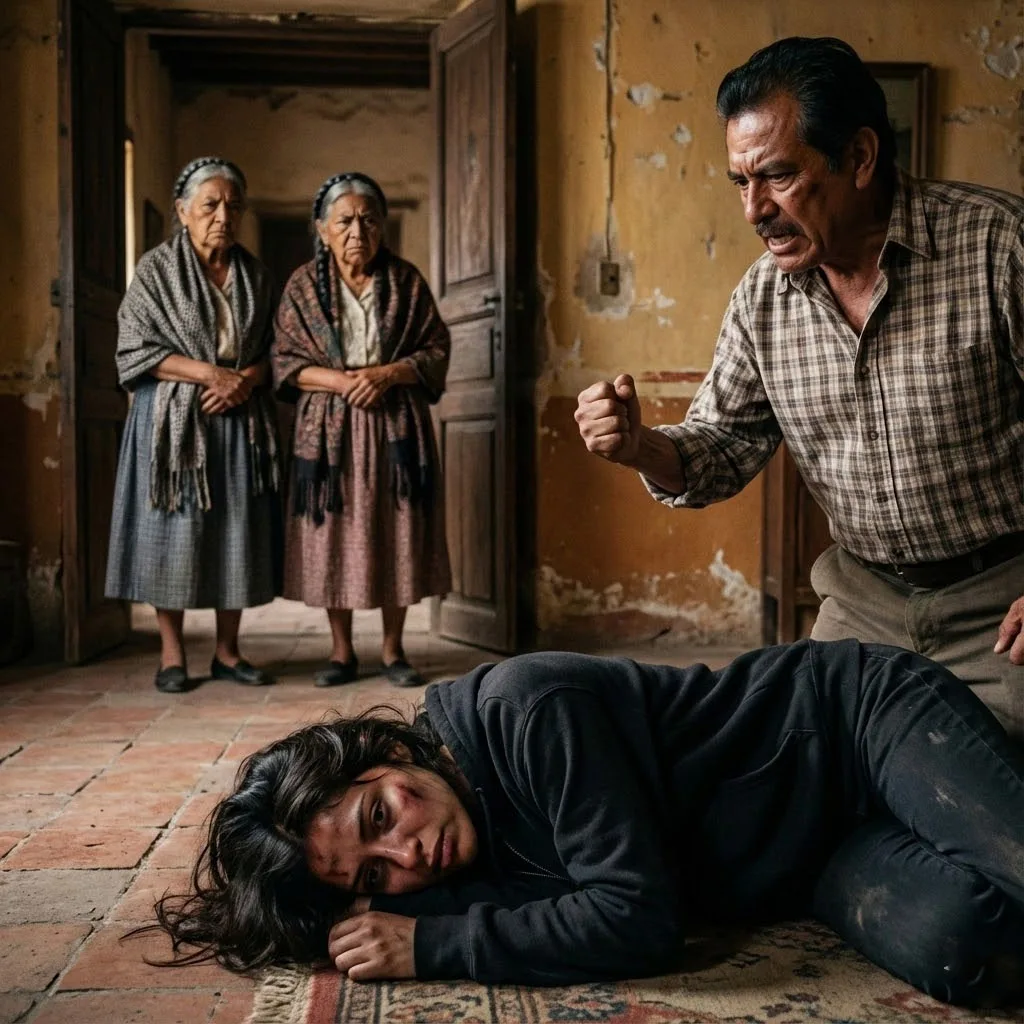
Lucía was sitting on the floor, leaning against the wall. Her hair was disheveled, her face swollen from crying, her arms covered in bruises she tried to hide. When she looked up and saw me, she broke down in sobs that tore my heart apart.
I knelt beside her and asked what had happened. She couldn’t answer right away. At that moment, Raúl, her husband, appeared in the doorway. He didn’t look surprised to see me — just annoyed.
— She’s exaggerating — he said. — She had a nervous breakdown. My mother was just trying to help her.
But there was no help in that scene. There was fear.
I looked around and noticed something else: Lucía’s phone was turned off on the table, and her purse was nowhere to be found. I asked if she had been allowed to leave or call anyone. She lowered her eyes and shook her head.
That’s when I understood: this wasn’t a simple family argument. They had decided to isolate her, control her, silence her.
When I tried to help her up to take her away, I heard a sharp sound behind me. Carmen had locked the door from the inside.
The click of the lock marked the beginning of real hell.
— No one is leaving — she said calmly.
My blood ran cold, but fear quickly turned into rage. I stood in front of my daughter like a shield. I said this was false imprisonment and that I would call the police. Raúl laughed, saying no one would believe “an emotionally unstable woman.”
That’s when Lucía found the strength to speak. Her voice was weak but firm as she told everything: the abuse, the threats, the control, the days she wasn’t allowed to go out alone, the phone taken away, the pushes disguised as “discipline.”
While she spoke, I recorded everything on my phone.
Without warning, I called the police. Carmen tried to snatch the phone from my hand, but I pushed her away. I told them that if anyone touched Lucía again, I wouldn’t be responsible for what happened next.
The police arrived minutes later — minutes that felt like hours. When they saw the bruises, heard the story, and checked the recording, there was no debate. Raúl was handcuffed. Carmen tried to scream, justify herself, cry — but it was too late.
I took my daughter home that very night.
Today, Lucía is safe. She’s in treatment, slowly rebuilding her life. She still carries scars — some visible, others not — but she is alive, free, and supported.
And I learned something I will never forget: when a child calls crying for help, you don’t ask “why.”
You go.
Because sometimes, arriving in time is the difference between life and eternal silence.