“Happy birthday… you’re going to a nursing home,”
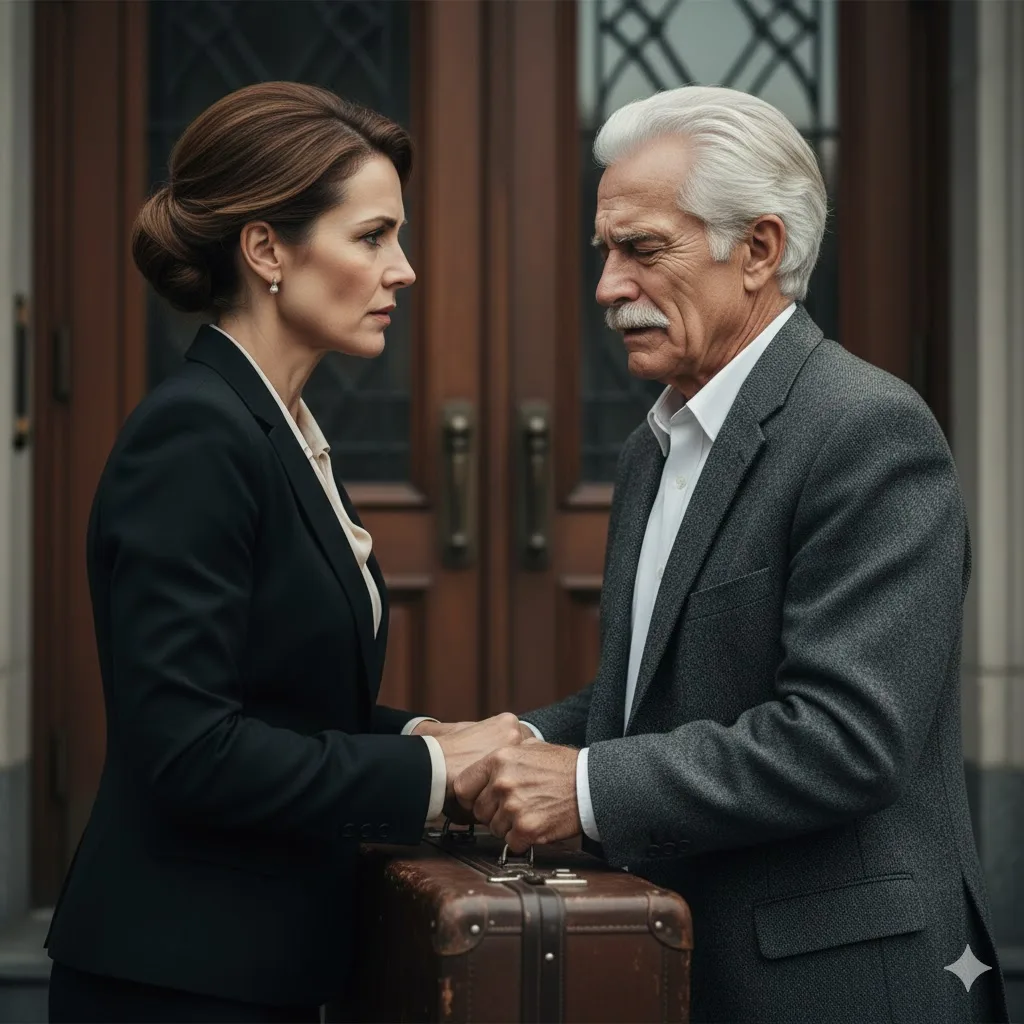
she said. I stayed silent — not knowing I owned the place.
I turned 80 on a Saturday. Since my wife died five years ago, I’d carried a familiar weight in my chest: grief mixed with loneliness.
Even so, that day I still held on to a small hope.
My only daughter, Marcela, had promised to take me out for breakfast at my favorite place. I put on my gray blazer, straightened my shirt, dabbed on cologne as if I could fool time… and, out of habit, I touched the inner pocket.
Inside was a secret she had no idea existed.
The car pulled away. Marcela drove in silence, staring ahead. Through the window I watched the city pass: first the restaurant where I always ordered green chilaquiles—left behind. Then the second place she’d mentioned. And the third.
With every turn, I pressed my hand harder against my blazer pocket.
That’s when I understood.
We weren’t going to breakfast.
We were going to get rid of me.
The drive lasted about twenty minutes. I recognized the area—Zapopan, north of Guadalajara—a route I knew well, because decades earlier I had built something important there.
Marcela stopped in front of a white iron gate with a golden sign.
Villa Serena.
My heart jolted—not from fear,
but from irony.
I knew that name better than anyone on earth.
Only my daughter… didn’t.
Marcela got out and opened the trunk. She pulled out two suitcases I hadn’t packed. She had prepared everything without telling me, without asking me. She set them down on the sidewalk with a dry thud and looked at me with no sadness—only impatience.
— Dad… I already spoke with the director. Everything’s arranged. They’ll take good care of you here.
She said it the way someone closes a deal. As if I were paperwork.
I nodded.
She stepped closer and gave me a quick, cold hug—no warmth, no strength.
Then she whispered, almost like she didn’t want the world to hear:
— Happy birthday. You won’t be in the way here. You’re too old… and you take up space at home.
In that moment, something inside me didn’t break.
It simply became clear.
For eighty years I worked to give her a future—comfort, stability. I built an empire from nothing. I put my name on buildings, land… and also on care homes like this one.
And now my own daughter was leaving me here like an unwanted piece of furniture.
I picked up the suitcases. They were heavy.
But nothing was heavier than the silence between us.
Marcela pointed toward the entrance.
— The director is waiting. Bye, Dad.
She got back in the car and drove away without looking back.
I stood there in front of the gate, sunlight on my face and cold rising from deep inside my bones.
I took a slow breath. I pushed the gate open.
And I walked in.
The stone path led to the main entrance. On both sides were small gardens with purple flowers—bougainvillea, just like the ones my wife loved to plant. My chest tightened, but I kept going.
On the wall was a bronze plaque:
“Villa Serena — founded in 1994 — Salazar Real Estate Group.”
I smiled without meaning to.
Salazar.
My last name.
My legacy.
I rang the bell. A young nurse opened the door, polite.
— Good afternoon. Are you Mr. Salazar?
— Yes. Esteban Salazar.
She led me to reception. Behind the counter, the director—a man around fifty with a thin mustache and impatient eyes—looked me up and down as if I were just another “old man” being dropped off.
— We have rules here. No complaints. Understood?
— Understood.
He pushed a form and a pen toward me.
I filled it out in silence.
Name: Esteban Salazar Mendoza.
Age: 80.
Emergency contact: none.
Marcela no longer counted.
— Room 12B, second floor — he said. — Nurse Lupita will take you.
I went upstairs. The room was simple: a single bed, a small nightstand with a lamp, a chair, a window facing the courtyard.
When the door closed, I touched the inner pocket of my blazer.
The manila envelope was still there—folded, hidden for decades.
I took it out slowly, sat on the bed, and opened it.
Inside was an old deed with seals and signatures.
I read softly:
“Villa Serena Care Home — Owner: Esteban Salazar Mendoza.”
I traced my name with my fingertips like touching an old wound.
I built that place with a purpose: to give dignity to people in old age. It was never meant to become a dumping ground.
And that first night, I didn’t sleep out of rage.
I slept out of decision.
The truth on the table
The next morning I put on my gray blazer like armor.
I went downstairs and watched how the home worked: clean, organized… but emotionally cold. In the dining hall, seniors ate quietly. And the director walked through, rushing everyone:
— Faster! We don’t have all day. Lights out at eight!
I saw bowed heads, tired eyes.
It hurt.
Not because I was there as a resident—
but because I knew I had created that place to be a home, not a boot camp.
Back in my room, I took the envelope and asked the nurse to tell the director:
— I need to speak with him tomorrow morning. It’s urgent.
She looked at me closely, as if she sensed something different.
— I’ll let him know, Mr. Salazar.
At the scheduled time, I entered the director’s office. He didn’t even stand.
— What do you want? You have five minutes.
I sat calmly, placed the envelope on his desk, and took out the deed.
I unfolded it in front of him.
He began reading with boredom… until his face changed.
The arrogance drained away in seconds.
He read, stammering:
— O-owner… Esteban Salazar Mendoza…
Then I pulled out an old laminated ID from my pocket.
Founder — Salazar Real Estate Group.
His hand trembled. His coffee cup nearly slipped.
— Mr. Salazar… I… I had no idea… please forgive me…
I raised my hand.
— Silence.
He stopped instantly, like a child caught in the act.
— I came here as an ordinary resident for a reason. I wanted to see with my own eyes how you treat people. And I did.
Now it changes.
He swallowed hard.
— What do you want, sir?
— Two things. First: respect. No shouting. No rushing. No humiliation.
Second: I’m staying here for a while… and no one will know who I am. Only you.
He nodded, terrified.
— Yes, sir.
— And from today on, any complaint, any mistreatment—anything—you answer directly to me.
I gathered the envelope and stood.
— Start improving this place. And bring me, before noon, the list of residents with no family and no resources.
I walked out.
And for the first time since my wife died, I felt something like justice.
What Marcela lost
The list arrived: fifteen names. Fifteen stories of abandonment.
That same afternoon, I called my lawyer, Montoya.
— I want everything turned into donations — I said. — Funds, properties, shares… all of it.
Leave only a monthly pension for me to live with dignity.
He went silent in shock.
— Mr. Salazar… your daughter…
— My daughter called me a burden on my birthday and left me here.
Inheritance isn’t what she deserves. Consequences are.
That week, I signed papers, went to notary offices, visited legitimate institutions. With each donation I saw wet eyes, trembling hands—people crying with gratitude because they could finally buy medicine, fix roofs, hire staff.
My money, once just numbers, became life.
And I knew Marcela would notice.
She did.
The following Saturday, she showed up at the care home.
She got out of the car with a tight face and stormed inside, demanding to see me. When she spotted me in the garden, she came at me like a hurricane:
— Dad! What did you do?! You donated everything?! The house?! The accounts?!
I stayed calm.
— Hi, Marcela. I thought I was “in the way.”
She shoved her phone in my face—notifications, transfers, accounts emptied.
— You’ve lost your mind! That was mine!
I took a slow breath.
— No. It was mine.
And I decided it would go to those who need it, not to someone who treated me like trash.
She threatened lawsuits, judges, claiming I was “senile.”
I answered evenly:
— It’s all signed, registered, irreversible. And the organizations are already using the money.
Are you going to take medicine out of seniors’ hands to get what you think is “yours”?
She had no answer.
Then, like desperate people do, she changed her tone:
— Dad… forgive me… I was stressed… I have debts…
I looked at her for a few seconds. Not with anger—just clarity.
— You had years to be a daughter.
You chose to be an interest.
She cried, reached for my hand. I didn’t take it.
— I don’t wish you harm, Marcela. But I’m not going to shrink myself to fit your comfort again.
You decided I had no place in your home.
Now you’ll have to find a place in your own life.
Marcela left—defeated.
And the gate closed behind her the same way it did when I first walked in.
Only this time, I didn’t feel abandoned.
I felt free.
A new beginning
Three months passed.
I stayed in Room 12B, as promised.
But Villa Serena changed.
The director began treating residents with respect. We hired more nurses. We improved the dining hall. We repaired the common room. We created workshops, conversation circles, a livelier garden.
Most of all, the home became what I always dreamed it would be: a place of dignity.
No one knew I was the owner.
They only knew I was Esteban—a quiet man who arrived without a fuss, treated everyone well, and little by little helped change the atmosphere.
One day a new resident arrived—left at the gate by his son, suitcases on the sidewalk.
I saw it, went down slowly, and extended my hand.
— Welcome. My name is Esteban.
The man looked at me with wet eyes.
— I was abandoned.
I nodded.
— Me too.
But here… you learn that family isn’t only blood.
It’s presence. It’s respect. It’s care.
That afternoon I sat under the purple bougainvillea and watched the sky turn gold.
I thought of my wife. I thought of the man I used to be. I thought of what Marcela did to me.
And I realized something:
I didn’t lose a daughter that Saturday.
I lost an illusion.
And I gained something greater:
my own worth back.
And in the end, it was the best birthday of my life—because at eighty, I finally learned that dignity isn’t negotiable.
Not even with family.