The Girl Who Broke the Silence of the Heat
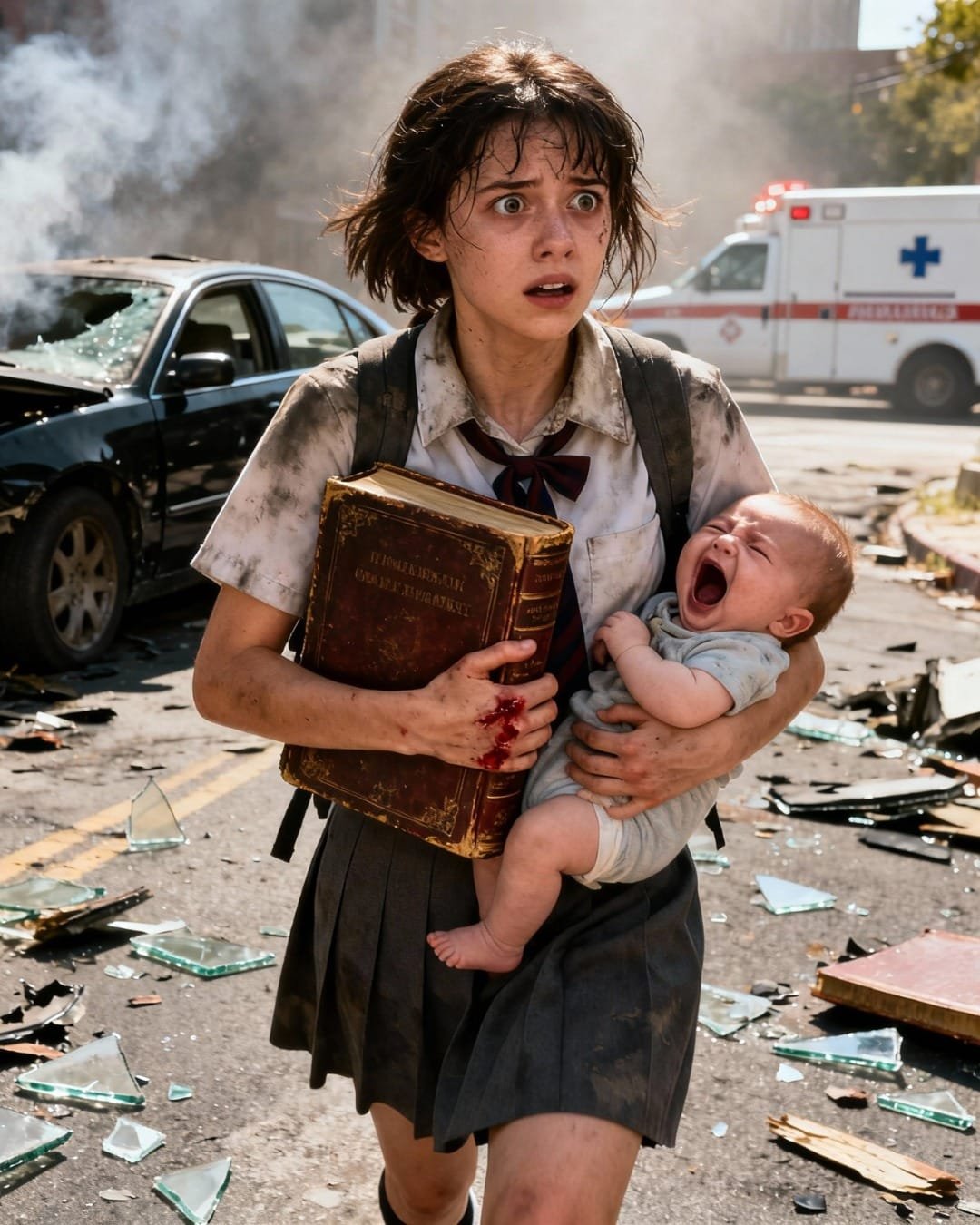
The streets of Buenos Aires shimmered under the merciless midday sun as Patricia Suárez, a sixteen-year-old girl, ran desperately toward school.
The heavy air clung to her skin, and the asphalt radiated such intense heat that the buildings in the distance seemed to tremble. Her worn shoes struck the sidewalk in a frantic rhythm as she dodged the few passersby, clutching a stack of used books tightly to her chest.
Her heart pounded at her temples, but she didn’t slow down.
It would be the third time she arrived late that week.
On Monday, the principal had been blunt, staring at her over his glasses:
“Suárez, if you’re late one more time, we’ll review your scholarship. There are many students waiting for your spot.”
“I can’t lose it,” Patricia kept repeating to herself like a desperate mantra.
Without the scholarship, she would have to leave the private school she had entered almost by miracle and start working full-time at the neighborhood grocery store, like her mother. Studying was her only way out.
Her uniform, inherited from an older cousin, was a little too big and showed the marks of time: frayed cuffs, a permanent yellow stain on the collar of her shirt, a poorly stitched patch on her skirt. Still, Patricia wore it with pride—as if it were brand-new.
When she turned onto Avenida Libertador, she slowed slightly to avoid a man pushing an ice-cream cart. That’s when she heard it.
At first, she thought she imagined it—a muffled sound mixed into the distant noise of the city. But then it came again, clearer: a weak, uneven cry, fading in and out.
She stopped abruptly.
That section of the avenue, usually crowded at that hour, was strangely empty. A few parked cars, metal shutters down, the city’s murmur far away.
The crying came from a black Mercedes, parked under direct sunlight, all windows closed.
Patricia walked closer. Her reflection appeared distorted in the dark glass: sweaty face, anxious eyes. She pressed her forehead to the window to see inside.
In the back seat, a baby was strapped into a car seat.
He was barely moving. His face was flushed red, his hair stuck to his forehead with sweat, his lips moved, but almost no sound came out.
“My God…” she whispered, her stomach twisting.
She knocked on the window with her knuckles.
“Is anyone there? The baby!” she shouted, looking around.
No one answered.
The baby stopped crying. His movements became slow, almost imperceptible.
A cold panic shot through Patricia. She remembered a story she had read days earlier: a baby had died of heatstroke after being left inside a car.
“No… no…” she muttered.
She glanced at her phone. She was officially late. She could keep running to school. Pretend she hadn’t seen anything. Save her scholarship.
But the image of that tiny body going still choked her.
There was no choice.
Her eyes searched the ground. Near a tree lay a broken brick. She picked it up with trembling hands.
“I’m sorry…” she whispered, not knowing whether she was speaking to the car’s owner, to the baby, or to her own future.
She shut her eyes and slammed the brick into the rear window.
Glass exploded outward with a sharp crack that echoed down the avenue. Shards scattered across the seat and floor. Instantly, the alarm blared, slicing through the midday silence.
Patricia felt small cuts on her arms, but she didn’t stop. She reached through the jagged opening, unbuckled the car seat straps, and pulled the baby out carefully.
His body was burning hot.
She pressed him tightly against her chest.
“Easy… you’re out now…” she murmured, barely able to breathe.
Neighbors appeared in windows.
“What are you doing?!” a man shouted.
“He was going to die from the heat!” Patricia yelled back, already running.
The public hospital was about six blocks away. She ran. Every step burned. The baby felt heavier with each block. Air ripped at her lungs, but she didn’t stop.
A car braked beside her. The driver, a middle-aged man, rolled down the window.
“What happened?”
“Hospital! He’s dying!” she cried.
The man didn’t hesitate. He opened the door and sped off.
Minutes later, Patricia rushed into the emergency entrance.
“Help! Please!”
A nurse saw the baby and shouted for a stretcher.
“Dr. Salcedo!” someone called.
A doctor in his forties ran in. When he saw the baby, he froze as if he’d hit an invisible wall.
His hands began to shake.
“No… it can’t be…” he whispered.
When he spotted the small blue bracelet on the baby’s wrist, a sob broke from his throat.
“Tomás…”
His knees gave out. He dropped to the cold hospital floor, sobbing, not caring who watched.
“He’s my son…” he said through tears. “He was kidnapped this morning…”
Silence filled the corridor.
The kidnappers had abandoned the baby in the car when they realized police were closing in.
Because Patricia acted quickly, Tomás survived.
Hours later, the doctor stepped out of the emergency room.
“He’s out of danger.”
The mother cried with relief. The doctor approached Patricia, knelt before her, and gently held her wounded hands.
“You saved my son’s life.”
“I just did what I had to…” she replied.
“No. You did what many wouldn’t.”
When he learned Patricia might lose her scholarship because she was late, the doctor said firmly:
“That won’t happen. I’ll speak to your principal myself.”
Days later, the story made the news. The principal kept her scholarship. A month later, in a small ceremony at the hospital, the doctor announced a scholarship created in Patricia’s name.
When she held Tomás and the baby opened his eyes, she understood that it had all been worth it.
The fear. The shattered glass. The lateness.
And she knew, with absolute certainty, that if she were back on that corner again, she would do exactly the same.
Because some choices, even when they cost everything, save lives.