HE FIRED HER SIX YEARS AGO
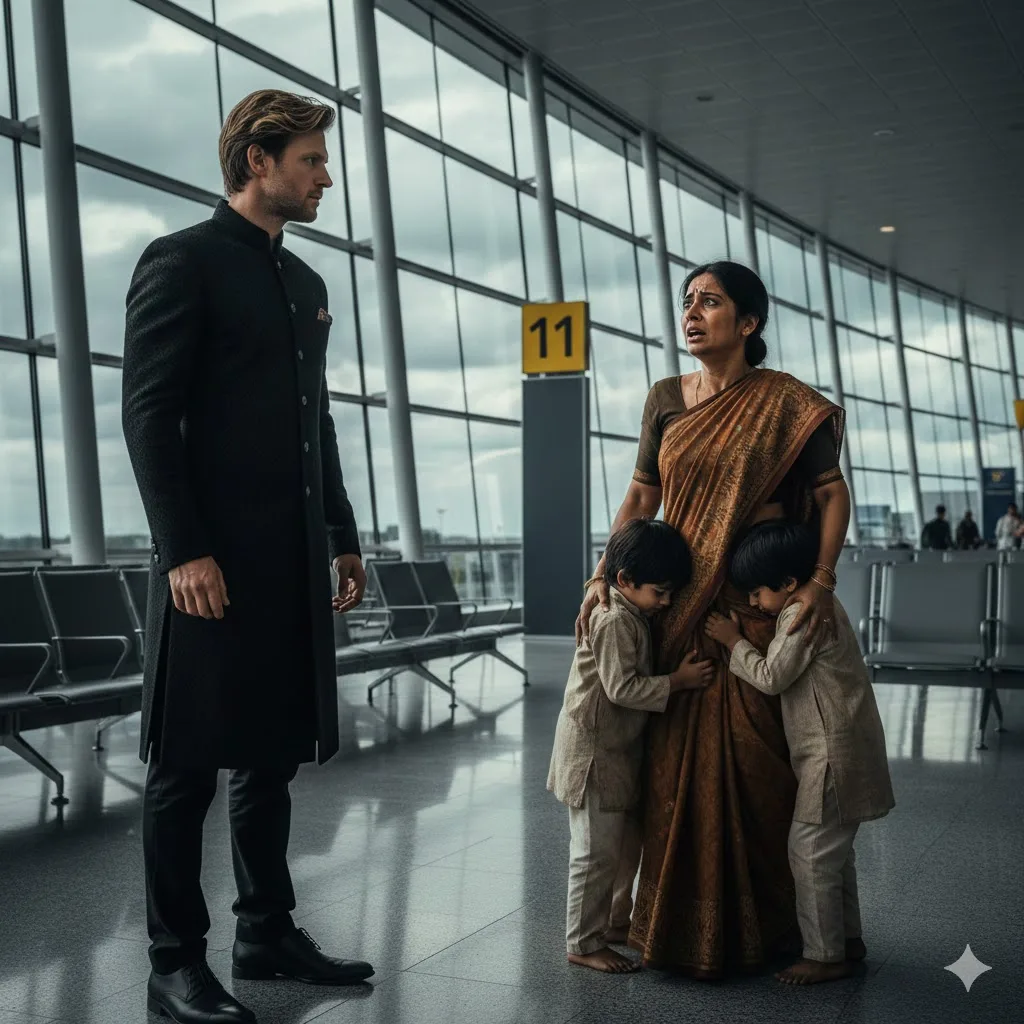
— TODAY, SEEING HER AT THE AIRPORT WITH TWO CHILDREN, THE LITTLE BOY LOOKED AT HIM, SMILED… AND THE MILLIONAIRE’S WORLD COLLAPSED
Lucas Avelar had always recognized the same sound in his routine: the echo of suitcases rolling across the floor of Guarulhos International Airport, mixed with the mechanical voices announcing departures. It was the perfect rhythm for a man who lived in motion. At 43, founder of Avelar Investments, he walked fast, precise, calculated.
“Mr. Avelar, the London team is already on the video call asking if you’ve boarded,” said Gabriel, his new assistant, juggling three phones, a thick folder, and a coffee about to spill.
“Tell them to wait,” Lucas replied without slowing down.
The merger with the European group would be the biggest deal of the year — 6.5 billion reais — securing his name in the international market.
He was about to pass through the boarding area when a child’s voice cut through the noise like a blade:
“Mommy, I’m hungry…”
Lucas stopped.
He never stopped.
He turned slowly.
Sitting on one of the scratched metal benches was Helena, shivering from the cold, holding two children — twins, a boy and a girl, about five years old. Her coat was far too thin for São Paulo’s winter. The children shared an almost empty pack of cookies.
Lucas’s first thought was cold, automatic:
Poverty.
The second hit him like a punch to the stomach.
He knew that face.
The face he had once seen reflected in the marble mirrors of his mansion.
The face that had looked at him with respect… and fear.
He hadn’t seen her in six years.
“Sir, are you okay?” Gabriel asked, almost bumping into him.
Lucas didn’t answer.
The airport, London, the business — everything faded into distant noise.
“Helena…?” he whispered.
She heard him.
Her entire body tensed. Her eyes, once full of life, were now tired and alert.
“Mr. Avelar…?” she murmured, instinctively pulling the children behind her.
Helena had worked in his Higienópolis mansion for two years. Quiet, efficient, invisible. One day she simply stopped showing up. Lucas had been annoyed by the inconvenience — nothing more. He hired someone else and never thought of her again.
“What are you doing here?” he asked. “You’ve… changed.”
She looked down, ashamed.
“We’re waiting for a flight.”
Lucas then looked more closely at the children.
The messy brown hair was like hers.
But the eyes…
Blue.
The same blue as his.
A cold shiver ran down his spine.
“Are these children… yours?”
“Yes,” she answered too quickly.
Lucas crouched down to their level — something he hated doing.
The boy stared at him without fear. There was curiosity there. And something familiar.
“What’s your name, champ?” Lucas asked, struggling to keep his voice steady.
The boy smiled, dimples appearing.
“My name is Luquitas.”
Lucas went pale.
No one had called him that since childhood.
He slowly lifted his head and looked at Helena.
She was crying silently.
And in that cry, everything became clear.
“Are they… mine?” he asked, barely audible.
Helena took a deep breath, defeated by exhaustion and truth.
“I was fired the same day I found out I was pregnant,” she said. “I was scared. You always made it clear that children ‘complicated’ life. I needed to work. I needed to survive.”
The weight of the years fell on Lucas’s shoulders.
“Why didn’t you ever look for me?”
“Because you never look back, Mr. Avelar,” she replied softly. “Until today.”
The loudspeaker announced the European flight boarding.
Gabriel cleared his throat nervously.
“Sir… the plane…”
“Cancel everything,” Lucas said.
“What?”
“Everything.”
He turned to Helena, his eyes wet — something no one had ever seen.
“Where are you going?”
“I don’t know,” she replied. “Wherever we can.”
Lucas knelt again, now in front of both children.
“Are you hungry?”
The twins nodded immediately.
That day, Lucas Avelar didn’t board the plane.
Didn’t close the deal.
Didn’t make headlines.
But for the first time in decades, he went home.
Not to the empty mansion.
But to the one place money had never reached before:
his responsibility.
And in Luquitas’s smile, he understood that some losses only become irreversible when we choose not to see them.