One day, my mother came home with a boy in tattered clothes and said:
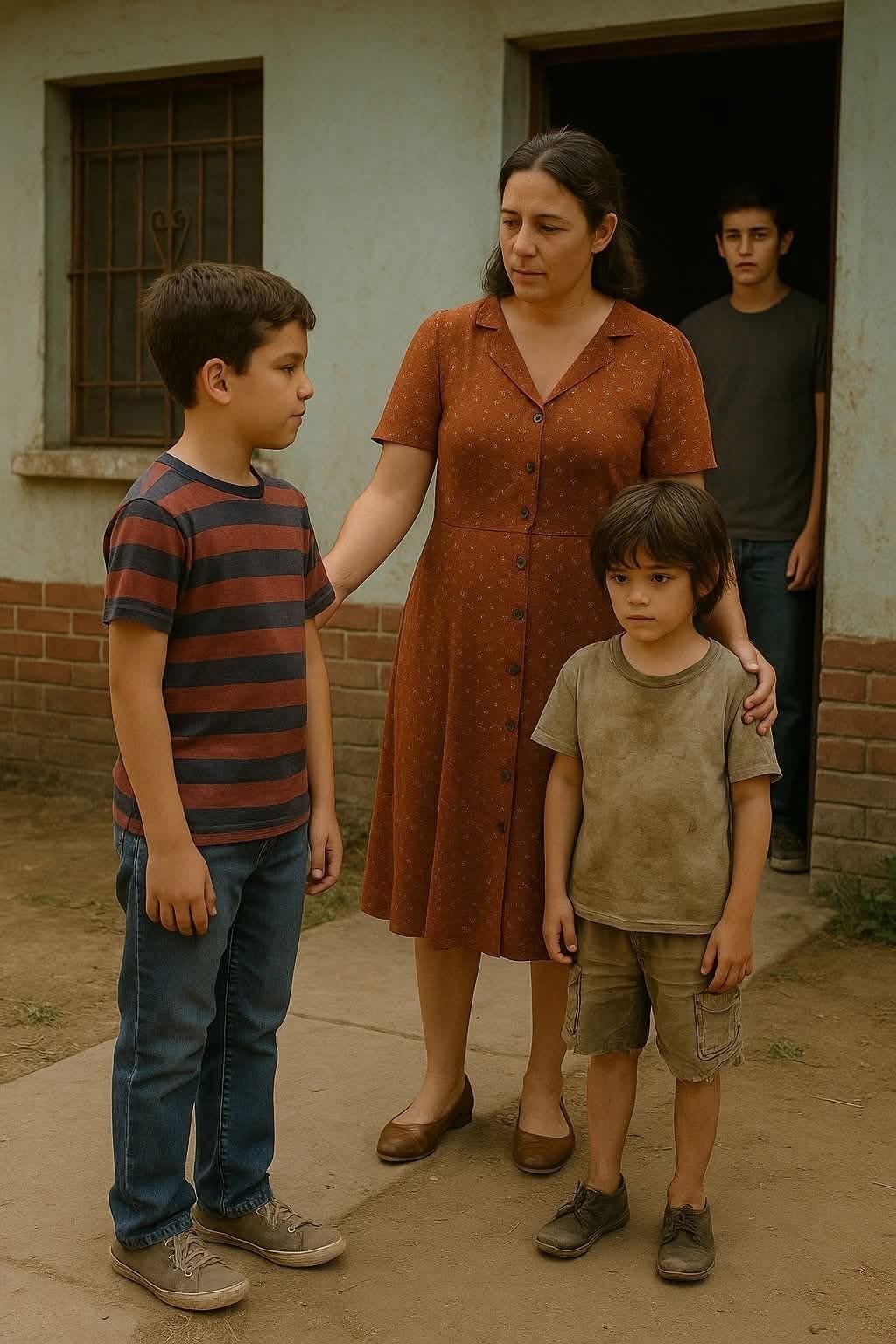
— Son, let him play with you.
Twenty years later, we were all deeply shocked when his true identity was revealed…
It was the summer I turned ten, and our family life was peaceful in a small neighborhood on the outskirts of Guadalajara.
My father was a mechanic, my mother sold fruits and vegetables at the San Juan market, and my older brother and I grew up flying kites and eating beans with tortillas under the reddish sunset sky.
One day, while I was playing outside, I saw my mother returning, holding the hand of a skinny boy with ragged clothes and messy hair that nearly covered his eyes.
The boy must have been about six years old, and he stayed silent, head down, holding the hem of my mother’s dress with his dirty little hands.
— Son — my mother said in a soft but firm voice — this is Tito. He’s going to live with us for a while. Let him play with you, okay?
I stared at the strange boy; his eyes seemed empty, as if he didn’t know who he was or where he came from. I wanted to ask questions, but seeing the seriousness on my mother’s face, I simply nodded.
That night, Mom explained that she had found him wandering through the market, hungry and scared. She asked him who he was, but the boy couldn’t remember anything: not his full name, not his family, not where he lived.
Dad suggested taking him to the police station to try to locate his parents. They recorded the case, but since there were no clues, they asked us to take care of him temporarily while they investigated.
My parents agreed, and so Tito officially became part of our household.
In the following days, he slowly adapted.
Mom bought him new clothes, cut his hair, and enrolled him in school with me.
He barely spoke; it seemed as if his memory had been erased by some mysterious accident.
When I asked, Mom would just smile and say:
— You’re his brother, and that’s enough.
Dad asked me to look after him, and over time, I got used to that quiet yet kind boy.
My older brother, always playful, initially teased him but eventually grew fond of him and would take him to the fields to catch crickets.
Tito enjoyed watching me draw, and sometimes I would secretly make small portraits to give to him.
Years went by, and since there was never any news about his family, my parents legally adopted him.
Tito became an essential part of the household: intelligent, always at the top of his class, the pride of the family.
I, on the other hand, was an average student who only wanted to paint.
Tito dreamed of becoming an engineer and worked tirelessly toward it.
At eighteen, he earned a full scholarship to a prestigious university in Mexico City.
The house was filled with joy.
Mom hugged him, crying, and Dad gave him a proud pat on the shoulder, as if he were his own son.
Twenty years had passed since Tito arrived.
I was now thirty, an independent painter living in the capital.
My older brother was married with two young children.
My parents still lived in the old house, a bit bent with age but happy.
Tito, now a successful engineer, had just returned from a major international project.
To celebrate his return, we prepared a simple dinner at home.
That night, as we laughed together, a luxury car stopped at the door.
From it stepped an elegant couple, accompanied by an elderly man in a suit who seemed to be their lawyer.
— Tito? — the lawyer said in a grave, formal voice —. You are, in fact, the legitimate heir of the Del Valle family, one of the country’s most traditional and wealthy families. Your biological parents died in an accident, and all documents show you were lost as a child.
Tito went pale. I met his eyes and saw the same frightened boy from twenty years ago, now facing an unimaginable revelation.
He took a deep breath, looked at our adoptive parents, at me and my brother, and said:
— I… never felt alone with you. You are my family.
The elegant couple smiled, respecting Tito’s decision, and together we sat down at the table, realizing that true wealth was not in gold or titles, but in the love we had built over two decades.
And so, the boy in tattered clothes whom my mother brought home all those years ago became a successful man, yet he never stopped being our Tito—the brother, the son, the friend.