The Son Who Drove His Father Away… and the Encounter That Changed Everything
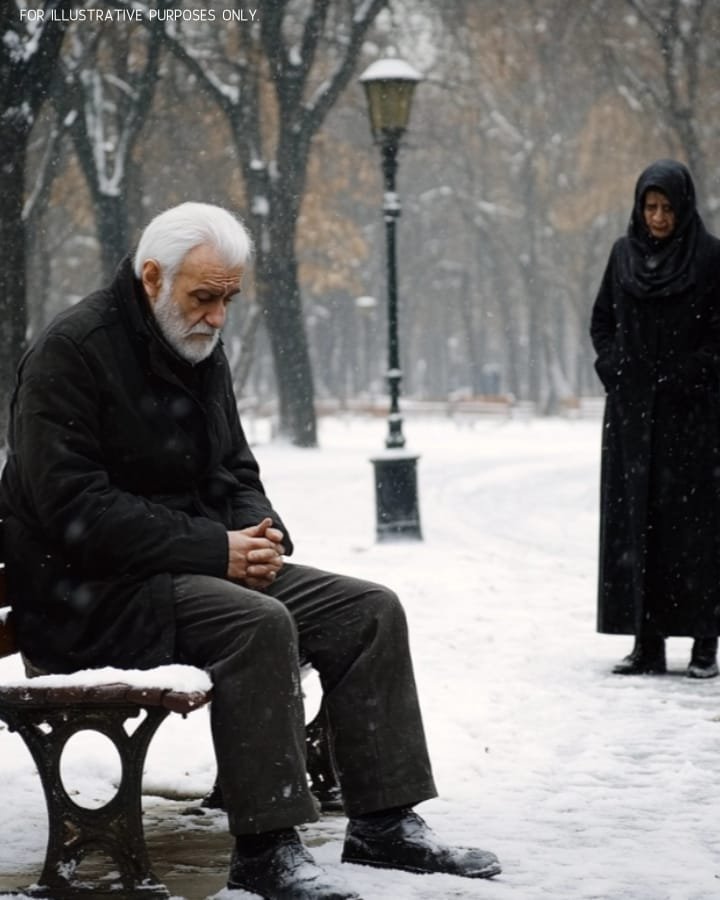
Nikolai Andreyevich sat silently on a cold iron bench, wrapped in a worn coat that once symbolized his former role as a foreman at the housing office. Once a respected professional, a devoted husband, father, and proud grandfather, he now found himself a lonely man—his world shattered in a single day.
Rejection
When his son Valery brought home his new wife, Olga, Nikolai felt a chill deep inside. There was something about her—an icy gaze hidden behind a charming smile. She never shouted or created scandal, but slowly, she erased him from his own home.
His books were boxed away. His favorite armchair disappeared. The kettle he used daily was gone. Then came the hints: “Father, maybe you should take more walks? The air will do you good.” And soon, the suggestion: “You’d be better off in a care home… or at Aunt’s in the village.”
Without protest, Nikolai gathered what little remained of his belongings and left. No accusations, no tears, no pleas—only silent pride and deep pain.
Loneliness
He wandered the snowy streets like a ghost. One park bench became his refuge—the same bench where he once walked with his late wife and played with his young son. Now, he only sat in silence, staring into nothingness.
Then, on a bitterly cold day, a familiar voice broke through the frost:
— “Nikolai? Is that you?”
A woman stood before him, wrapped in a warm coat and scarf. He didn’t recognize her at first, but memory stirred—it was Maria Sergeyevna, his first love, the one he had lost long ago when duty had separated them.
The Reunion
She carried a thermos and a small bag of pastries.
— “What are you doing here? You’ll freeze to death…”
That simple question, filled with care, warmed him more than any coat. They talked. Maria shared her own loneliness: her husband had died, and her only pregnancy ended in heartbreak. Her life since then had been reduced to work, pension, knitting, and silence.
— “Come with me,” she said gently. “It’s warm at my place. I’ll make soup. You don’t deserve to be alone.”
That night, for the first time in years, Nikolai did not sleep on a park bench. He awoke instead in a cozy room, greeted by the smell of warm pies and the sight of curtains patterned with daisies.
A New Life
Days turned into weeks. Slowly, Nikolai came back to life. He fixed chairs, helped with chores, and shared stories from his past—like the time he saved a colleague from a gas explosion. Maria, in return, cared for him, knitting scarves, cooking hearty soups, and offering companionship he hadn’t felt in years.
The Son’s Return
One afternoon, Maria returned from the market to find a man at her gate. Valery.
— “I’ve been looking for you, Father,” he said, guilt heavy in his voice. “Olga left me. I was wrong.”
Nikolai looked at him calmly.
— “I forgive you. But I won’t come back with you. Here, I’ve found warmth again. Forgiveness isn’t forgetting.”
Years passed. Then Valery returned again, this time with a little boy named Sasha.
— “This is your grandfather,” Valery told him.
Sasha handed Nikolai a drawing of two people on a bench.
— “I want a grandpa,” the boy said.
Tears welled in Nikolai’s eyes as he embraced the child. Life bloomed anew. He built swings, crafted toy boats, told bedtime stories. Maria watched with quiet joy as love returned to their home.
The Ending
In time, Nikolai and Maria married in a simple ceremony—just the two of them, Valery, and little Sasha. No grandeur, only love rediscovered.
Years later, Olga appeared again—thin, pale, and regretful.
— “I lost everything,” she whispered.
— “I’m not angry,” Nikolai replied. “But you cannot come here. This house is filled with kindness, and you once brought only cold. I wish you peace—but not here.”
Life continued until Maria passed away. Nikolai held her hand and whispered:
— “Wait for me.”
He lived a few more years, surrounded by the laughter of his grandson, until one spring morning he too passed peacefully—on the very bench that had once symbolized his loneliness, and later, his rebirth.
Today, that bench bears a plaque:
“Here, everything changed. Here, hope was reborn.”
Children still sit there with their grandparents, learning the meaning of love—not through words, but through presence and care.