I CARED FOR MY HUSBAND THROUGH CANCER — WHEN HE DIED, HIS CHILDREN THREW ME OUT ON THE STREET
I met Elias when I was 39. He was 52 — charming, kind, and the kind of man who made you feel safe just by being near him. A year later, we were married. I loved him in ways I didn’t even know love could reach.
Then came the diagnosis: stage 4 pancreatic cancer.
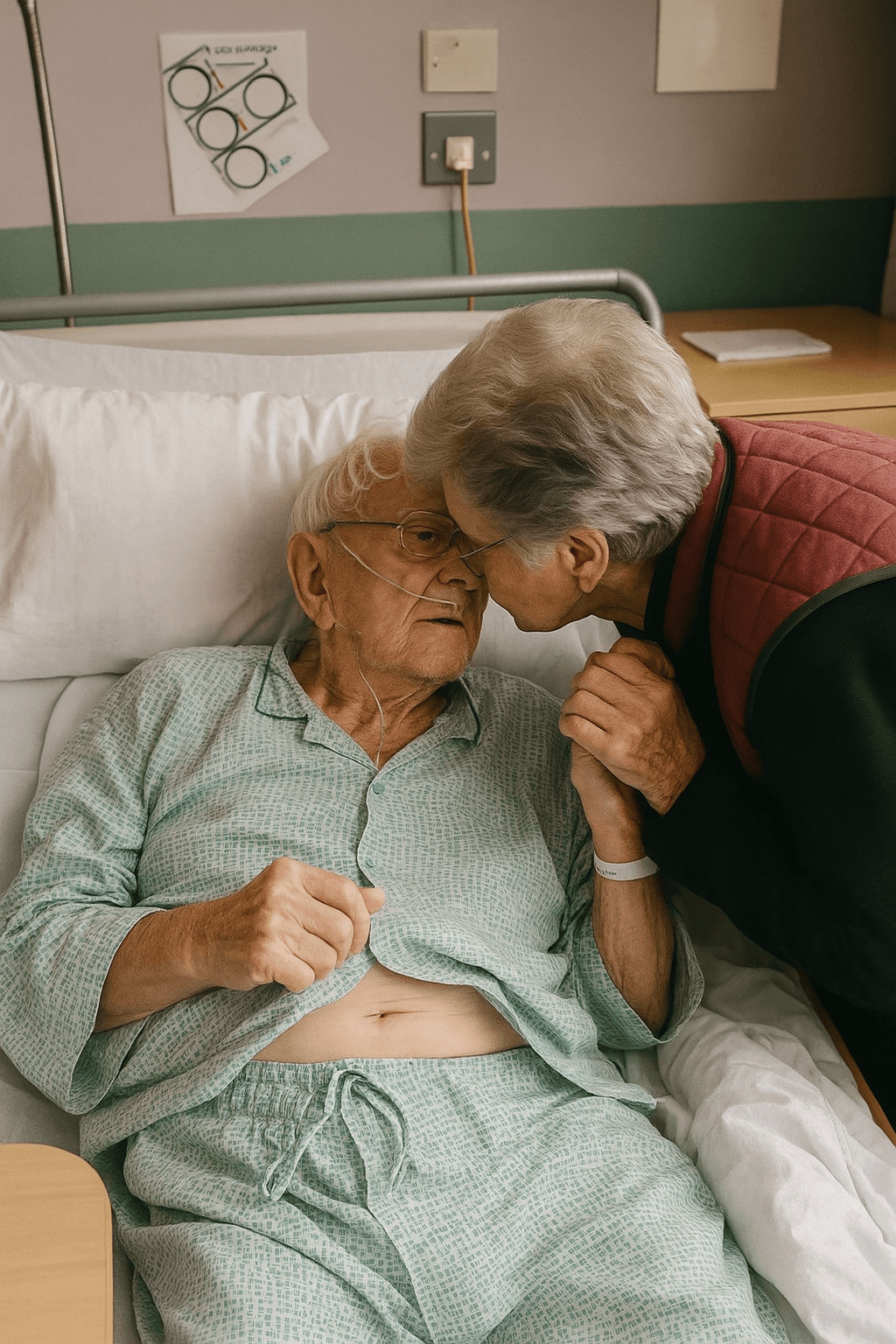
For two years, I cared for him. I fed him, bathed him, sat beside him during his worst moments. His children, Maya and Jordan, visited now and then, but never stayed long. Work was always too demanding, and they “couldn’t handle” seeing their father that way. But I could. I did. Every day. Every night. Until the moment he took his final breath.
The very next day, after the funeral, they came to our home — my home.
“We’re selling the property,” Jordan said, arms crossed like a judge delivering a sentence.
Maya stood beside him, not even looking up from her phone.
“Dad left everything to us. You need to be out by the end of the week.”
I stared at them in disbelief.
“Elias would never do that.”
Jordan tossed a folder onto the coffee table. A will. Signed. Notarized. The house, the bank accounts — all left to them.
“You can keep your clothes, obviously,” Maya added casually.
I felt dizzy.
“This doesn’t make sense. I was his wife. I—”
“Yeah,” Jordan interrupted, “but you weren’t our mother.”
To them, I was nothing.
A week later, I stood on the sidewalk with two suitcases, watching strangers walk through my former home, complimenting the “lovely hardwood floors” I had polished with my own hands.
That’s when my phone buzzed.
A message from an unknown number:
“Check the storage unit on Fremont. Locker 112. Dad wanted you to have it.”
I froze. Elias had never mentioned a storage unit. And I didn’t know who sent the message.
The next morning, I rented a car and drove to the address on Fremont Street.
The manager checked my ID, then handed me a key.
“Locker 112 is yours now,” he said kindly.
My hands shook as I turned the key in the lock. The door creaked open, revealing a small space with a few boxes and a wooden chest.
In the first box, I found photos of me and Elias — birthdays, beach trips, lazy Sundays. There were letters, too, handwritten by him. I sat on the concrete floor and opened the first one.
My dearest Clara,
If you’re reading this, then I’ve gone where you cannot follow — not yet, anyway. I hope my words bring you comfort. I’m sorry for what my children are putting you through. They’ll never understand the depth of what we had.
In this locker are the things I set aside for you — things I couldn’t leave to you directly because of the complicated nature of family. Please forgive me for not telling you sooner. I only wanted to protect you.
I love you more than words can express.
Forever yours,
Elias
Tears filled my eyes as I kept going. In another box, I found jewelry — a pearl necklace, diamond earrings, and a gold bracelet engraved with Forever Yours. They likely belonged to Elias’s late wife, but he had kept them for me.
Then I opened the wooden chest. Inside was a thick envelope marked “Legal Documents” and a small velvet pouch. I opened the pouch and gasped — inside was a breathtaking diamond ring.
The envelope held property deeds — three vacation homes across different states — and bank statements. All accounts were in my name, each with enough money to completely change my life.
Elias hadn’t abandoned me. He’d planned for everything, knowing exactly what his children might do. For the first time since he passed, I felt hope.
In the following weeks, I moved into one of the vacation homes. One afternoon, as I was unpacking, I found another letter tucked between books.
Clara,
I know you’re wondering why I hid these gifts instead of giving them to you outright. The truth is, I feared my children would fight it. I wanted to be sure you had something after I was gone.
You deserve peace, security, and happiness. Don’t let anyone — not even my family — take that away from you.
Live fully. Love deeply. And never forget — you were the greatest joy of my life.
With all my heart,
Elias
Reading those words, I realized Elias had given me more than money. He had given me a second chance — a new beginning, free of bitterness.
As the months passed, I slowly began to heal. I started volunteering at an animal shelter, picked up painting again (a hobby I had abandoned while caring for Elias), and became friends with Ruth, a warm, kind neighbor whose laugh reminded me of better days.
One evening, while we sipped tea on the porch, Ruth asked about my past. I hesitated, but shared pieces — the love, the betrayal, and ultimately, the redemption.
“Elias sounds like an extraordinary man,” she said thoughtfully. “Not many would think that far ahead.”
“He was,” I said, smiling softly. “He taught me that true love isn’t just about being there during the good times. It’s about making sure the one you love is taken care of — even after you’re gone.”
She nodded.
“He didn’t just give you wealth. He gave you a new life.”
“Yes,” I replied. “And I intend to live it to the fullest.”
Looking back, I see now that Elias’s greatest gift wasn’t in the properties or bank accounts — it was in the lessons he left behind: resilience, gratitude, and the courage to start over.
To anyone reading this, please remember: Life is unpredictable and often unfair. But every setback holds the seed of new beginnings. Don’t let bitterness define you. Focus on what matters — love, kindness, and the people who truly care.
If this story touched you, share it with someone who needs hope. And if you enjoyed it, consider giving it a like — it means the world to storytellers like me.
Thank you for reading.